
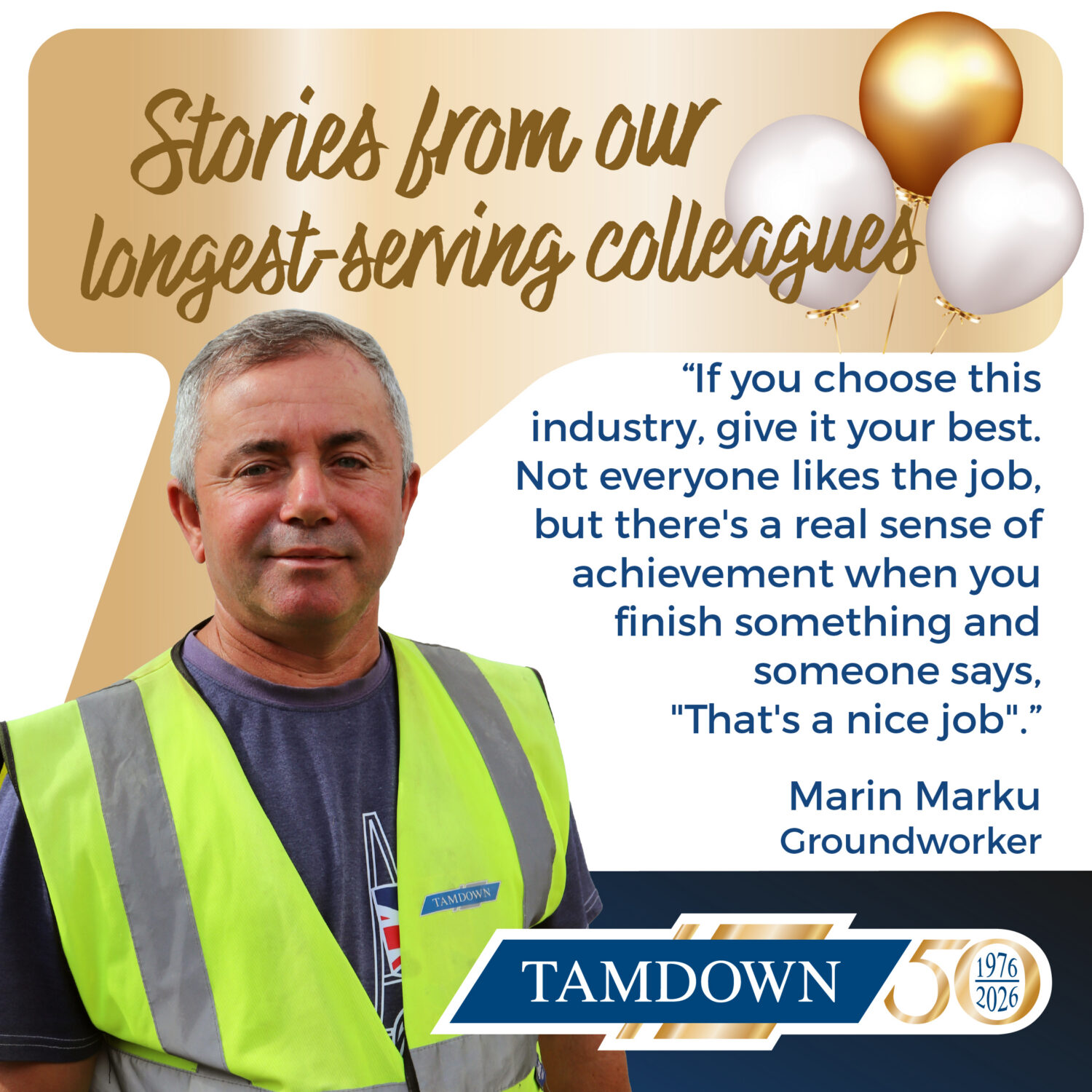
Stories from our longest-serving colleagues: this month's spotlight - Marin Marku
As part of our 50th anniversary celebrations, we’re proud to share the ninth story in our series spotlighting some of Tamdown’s longest-serving colleagues.
This time, we hear from Marin Marku, a groundworker who has spent 26 years helping shape projects across the business, from his first days at Greenhithe through to mentoring the next generation of site operatives today.
From learning the ropes on site to passing on decades of experience, his journey shows why our people remain at the heart of our success after 50 years.
What is your earliest memory of being on a Tamdown site?
My first site job for Tamdown was at Greenhithe in Kent. I worked with Mick Clarke when he was Site Manager and alongside people like Tommy Gant, who has also been here a long time.
After about three years I moved to Stone Castle, and Eamon Mahon, the Contracts Manager used to send me to different sites to help with kerbing work. I built up my all round groundwork skills as I went along, learning from experienced people.
Did you imagine you’d still be here 26 years later?
Not really!
I’ve met a lot of good people over the years. What has kept me going is the people around me and the chance to pass on what I’ve learned.
I enjoy mentoring apprentices and sharing my knowledge. I’ve worked with some great foremen, including Alan Talbot, Danny Dacey, John Wilson and Lonny Spall. Having good people around you makes the job better.
What project stands out as especially meaningful?
Greenhithe will always stand out because it was where I started, but I also enjoyed working at Harold Wood.
To be honest, I’ve enjoyed most places I’ve worked because the teams were good. When I first started, everything was new to me. People like Shaun Moon, Lonny and John were there and helped me along the way.
Do you have any funny stories that have happened?
One that always makes me laugh happened at Greenhithe when we were pouring concrete.
I warned someone to watch the corner because the ground had started to cave in while we’d been digging there. He told me not to worry and said he’d do it himself. The next thing we knew, he suddenly disappeared waist-deep into the concrete! We had to pull him out. We were all laughing afterwards. It just proved that sometimes you should listen to the warning.
I’ve had loads of laughs over the years, especially working with the Irish lads. They were funny guys. I used to say to them you’re putting me under pressure and they would say “no, pressure is only for tyres!”
How have tools and techniques changed over the years?
Things are much better now.
Years ago, everything was much harder on your body. We used to do far more manual lifting, especially with kerbs. Now machinery does a lot of the heavy work for you, which is much better for your back.
Health and safety has improved a lot too. We know more about things like hand-arm vibration and reducing strain on the body. Battery-powered tools are quieter and easier to use. The only downside is you have to keep charging them, but when the battery runs out, it gives you a chance for a break!
Do you have a moment when teamwork made all the difference?
For me, teamwork is about people helping each other every day.
If somebody is having a bad day or feeling down, there’s always someone to talk to. People genuinely care about each other here, and that makes a difference.
What makes a good site culture?
A good foreman and good colleagues.
I’ve always enjoyed working in strong teams and everyone pulling in the same direction. Winning Site of the Month at Rayleigh and Dunton was a proud moment.
It’s also the little things. We’ve had free pizza lunches on site which gives everyone a chance to get together and talk. It’s nice when managers and the office show appreciation because it makes people feel valued.
What keeps you motivated through the toughest days on the ground?
Providing for my family.
I want to be a good example for my son and show him the value of working hard. Site work isn’t easy, especially with the extreme weather, but you keep going.
One moment I really appreciated was when Rob Kendal (Managing Director) and Barry Maile (Construction Director) came out to site with champagne when I reached my 25 year work anniversary – I appreciated that. I had actually worked with Barry at Stone Castle when he was an engineer years earlier, so it was nice to see him again.
When people take the time to come out and thank you personally, it means a lot.
What advice would you give to someone just starting out?
Work safely. Learn your skills. Listen. Just keep going.
If you choose this industry, give it your best. Not everyone likes the job, but there’s a real sense of achievement when you finish something and someone says, “That’s a nice job.”
I’m quite fussy because I like things done properly. I remember working with one of our apprentices, who was laying edging. I told him it wasn’t quite straight and showed him how it should be done. We still laugh about it now. He knows I wasn’t being critical, I just wanted him to learn the right way. That’s how you improve.
If you start something, finish it properly and take pride in your work.
Thank you to Marin for sharing his stories from years gone by. We hope you’ve enjoyed this look back at Tamdown’s history. Be sure to keep an eye out for next month’s feature, where we’ll spotlight another long‑serving colleague and continue celebrating 50 years of dedication, growth, and community.

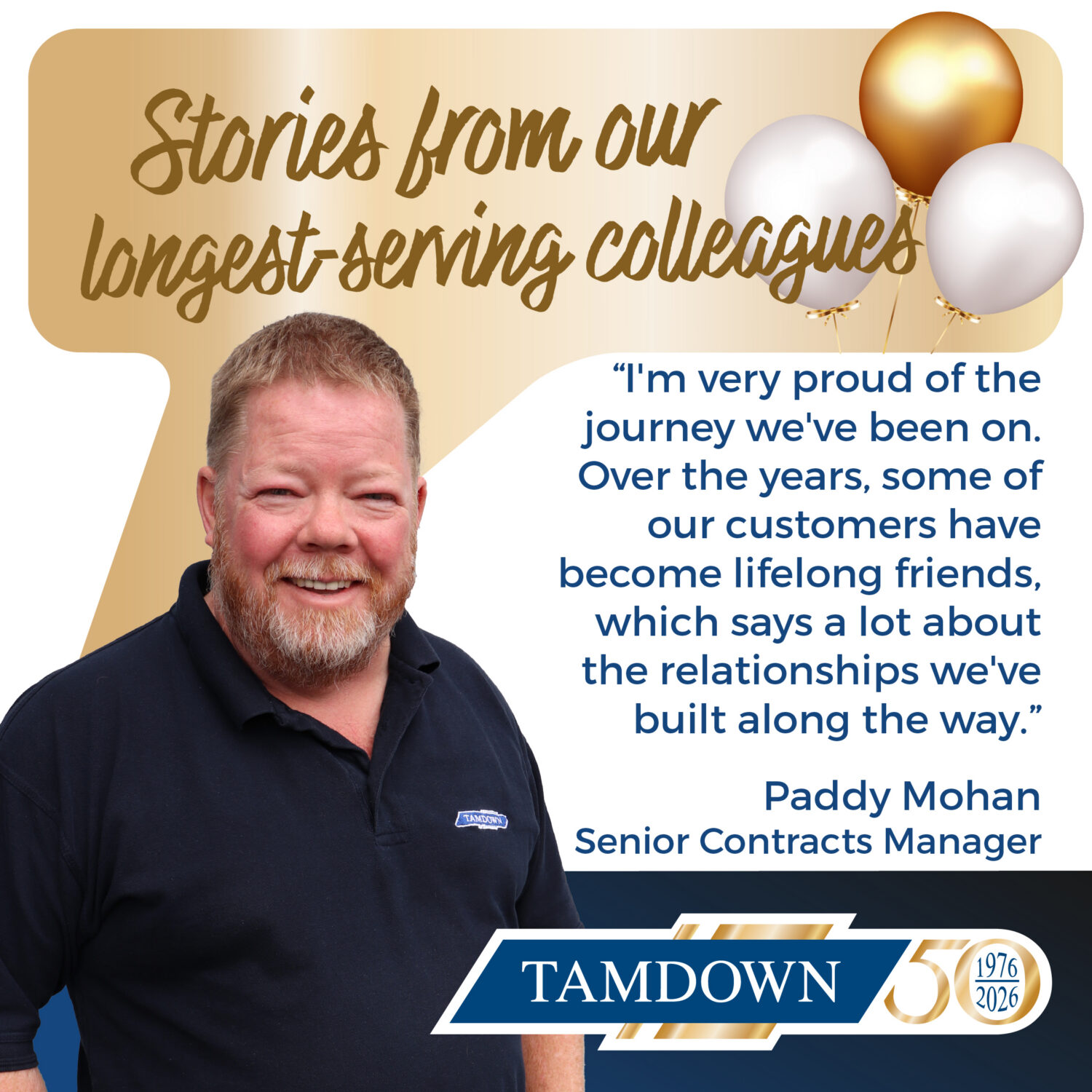
Stories from our longest-serving colleagues: this month's spotlight - Paddy Mohan
For some people, a career with Tamdown begins with a job application. For this month’s Stories from our Longest-Serving Colleagues feature, it began around the family kitchen table!
As the son of Tamdown co-founder Tom Mohan (affectionately known as “Ginger Tom”), Paddy Mohan witnessed the business grow from its earliest days, from watching wages being handed out from his home on a Friday to building a career that has spanned more than four decades.
A proud dad of three, he has progressed from Labourer to Senior Contracts Manager, and his story is one of hard work, loyalty, leadership and a deep pride in the people, projects and values that have shaped Tamdown over the last 50 years.
How are you linked to the formation of Tamdown?
My dad was one of the founders of Tamdown. Tom Mohan, affectionately known as “Ginger Tom”, started the business in 1976 alongside his business partner, Mick McDonnell. Growing up, Tamdown was always a big part of my life, so the company has been close to my heart from the very beginning.
What is your earliest memory of Tamdown?
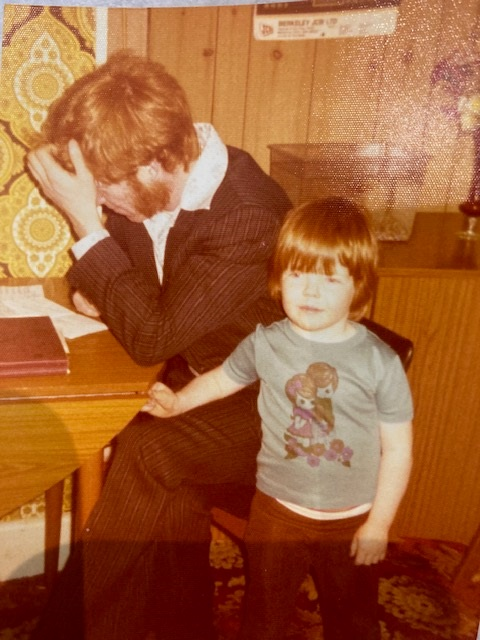
I always remember dad working the in corner of the kitchen. He would have all his paperwork spread out around him on the kitchen table. And I can also remember the workforce turning up on a Friday to pick up their wages. That was completely normal for me growing up. My dad lived and breathed Tamdown. He worked incredibly hard to build the business.
One summer, when I was 14, he told me, “You’re not lying around here all through the school holidays. You can help out on site.” So he arranged for me to work on the Bury St Edmunds site. He dropped me off on my first day, handed me over to the ganger man, Jim McCarthy, and left me there. Jim showed me how to operate a dumper and told me to get on with it. At the end of the day, one of the machine drivers dropped me home. That’s pretty much what I did for the rest of the summer holidays, helping out with whatever a 14 year-old labourer could do in those days.
At Christmas, I helped with the setting out for what is now No.4 Tamdown Way. I can still remember bashing pins into the frozen ground in the snow. After that, I spent every school holiday working on site.
The following summer, I worked with Keith Breen as a Trainee Engineer, and that’s when I realised I really enjoyed that role. It inspired me to go to college, where I completed my HNC. Keith and I got on well and has always been a great mentor and friend. There was always plenty of banter, although he was very good at keeping me in my place.
I remember before hard hats and high vis, the office was the dash of the van. Site phones were rare and mobiles didn’t exist. My first job on a new site was to find a phone box and make sure I had plenty of coins to make calls to order concrete!
What roles have you had during your time with Tamdown?
I’ve worked my way through a number of roles over the years: Labourer, Groundworker, Trainee Engineer, Engineer, Site Manager, Contracts Manager, Director of Operations and Senior Contracts Manager.
I’ve been running sites since I was 22 years old, so I’ve had the opportunity to build up experience across many areas of the business.
Looking back, I’ve been fortunate to see the business from almost every angle, having progressed from working on site as a labourer through to a senior leadership role.
Is there a project that stands out as particularly challenging or rewarding?
Great Notley Garden Village is one that really stands out. It was one of the first major projects I worked on, and I was involved from the very beginning, including the first infrastructure meetings.
I helped develop the drainage ponds in the Country Park, and when I look at them today, it’s incredible to remember sitting in a dusty site cabin trying to work out how everything would fit together. Now you see swans on the water, families walking their dogs and people enjoying the area. I’m really proud to have played a part in creating something that has become such an important part of the community.
There have been plenty of other moments over the years too. I’ll be driving along with my family and point things out to the kids, saying, “See that roundabout?” or “See that crane, that’s a Tamdown crane,” or “See that building up there? We did that.” I have a real sense of pride in looking back and seeing the impact of the projects I’ve worked on and know they’ve helped shape places where people live and work.
How would you describe the company culture now?
I still believe the company is founded on the same principles it started with, which is that we care. We still want everyone to go home safely at the end of the day, and that has never changed.
The culture is very much people-based. If you look after your workforce and make people feel valued, they’ll support you in return. I’ve always believed that when people know they’re respected and cared for, they give their best. For me, that’s one of the things that has remained consistent throughout Tamdown’s history and is still a big part of the culture today.
What have you found to be the most rewarding part of your time at Tamdown?
Developing people has always been the most rewarding part of my job. If someone is good at what they do, I like to encourage them to take the next step and give them the opportunity to try a higher role. As someone who is dyslexic myself, I’ve seen first-hand how people can thrive in our industry when they’re given the right opportunities and support.
People often think being a manager is easier, but the reality is very different. Alongside the job itself, you’re dealing with paperwork, customer expectations, supporting your workforce and sometimes helping people through challenges they’re facing at home. Sometimes promotion is not for them, but at least we have given them the opportunity.
When I look back, I’m proud of the people I’ve helped develop and the part I’ve played in their careers.
I’m also proud of the work we do. We’re building people’s homes, often the biggest investment they’ll ever make. There’s a real sense of satisfaction in delivering a project and creating places where people want to live.
Another part of the job I love is solving customers’ engineering problems. If a client has a challenging project and isn’t sure how to make it work, I enjoy being part of the team that finds a solution. I like that puzzle-solving aspect and figuring out how to turn an idea into reality.
What advice would you give to someone aspiring to a construction management role in the industry?
It’s a rewarding career and, if you’re prepared to work hard, it can be very rewarding financially too. Construction management isn’t just for people who are highly academic. If you’re a good problem-solver, can communicate well and enjoy developing and leading teams, there are plenty of opportunities to build a successful career.
The industry has changed a lot during my career. Years ago, groundworks wasn’t always viewed as a trade in the same way as bricklaying, but that’s changed. It’s become much more professional and covers a huge range of skills, from roads and drainage to paving and hard landscaping. There’s a lot more to it than people realise, which creates opportunities for people with different strengths and interests.
One of the things I like most about the industry is that you have something tangible to show for your hard work. At the end of a project, you can stand back, look at what you’ve helped create and say, “Yeah, we did that.”
What keeps you motivated after so many years?
Passion for what I do. I enjoy creating things and working with people to make that happen.
What does the company’s 50-year milestone mean to you personally?
I’m very proud of the journey we’ve been on. Over the years, some of our customers have become lifelong friends, which says a lot about the relationships we’ve built along the way.
There have been some unbelievable challenges to overcome, from recessions and global events to the uncertainty of Covid. It’s certainly been a rollercoaster at times, but we’ve always found a way to keep moving forward.
I’m especially grateful for all the legends I’ve worked with over the years (too many to mention), who helped shape my career and taught me so much along the way. I still remember people like Mike Morris as a Materials Buyer, Keith Breen as an engineer, Dawn Hillman on Reception, Rob Kendal starting out as a Trainee Machine Driver, Barry Maile and Lee Haylock as Trainee Engineers and Mike Hine as a forklift driver. Watching people develop and build successful careers has always been part of what makes Tamdown special.
To have been part of that journey, and to see the company reach its 50-year milestone, is something I’m incredibly proud of.
Thank you to Paddy for sharing his stories and photos from years gone by. We hope you’ve enjoyed this look back at Tamdown’s history. Be sure to keep an eye out for next month’s feature, where we’ll spotlight another long‑serving colleague and continue celebrating 50 years of dedication, growth, and community.
Stories from our longest-serving colleagues: this month's spotlight - Lonny Spall
As we continue celebrating Tamdown’s 50th anniversary, we’re proud to share the seventh instalment of our Spotlight series — shining a light on the people who have helped shape our journey. Each story brings to life the experiences of our longest‑serving colleagues, whose dedication, hard work, and personality have played a key role in building the business we know today. Their reflections not only look back on how far we’ve come, but also highlight the values, culture, and team spirit that continue to drive us forward.
This month, we caught up with Lonny Spall, Site Manager, who has the unique honour of celebrating his 50th birthday in the very same month Tamdown turns 50. We spoke to Lonny about his journey with the business, his proudest moments, and the experiences that have shaped his time with us.
What originally attracted you to join the company over 26 years ago?
I’d been self-employed for about five years when I joined Tamdown in January 2000. At the time, Tamdown was everywhere — you couldn’t miss them. I remember Rob Kendal was the surveyor on Oak Hill Park in Saffron Walden when I was made up to manager.
Do you remember your first day on site — what was it like?
Yes, I do, I was picked up from home at 6am by John Crick along with my gang, and we were dropped off at Great Leighs to work for Charlie Woollard, the site manager.
The first thing Charlie said when we got out of the van was, “So, what can you do, boys?” That stuck with me. Years later, when I became a site manager myself — ironically on a site where Charlie was the plant operator before he retired — I found myself saying the same thing to him!
How has your role evolved over the years?
I started out as a groundworker — an all-rounder really, apart from deep drainage. I always wanted to do my best and push myself. I knew I had ambition and wanted to learn everything I could.
I was lucky to be surrounded by experienced people early on, and that had a big influence on me — I learned by watching the standards they set. Shaun Moon, my Contracts Manager at Harold Wood played a big part in shaping the manager I became.
What has kept you with the company for so long?
I’d like to think a bit of cheeky charm has helped! But honestly, I’ve always had a good rapport with our customers, and I’ve never had bad reports on projects.
The opportunities to progress have kept me motivated too. You’re always encouraged to do more and be better. And it’s the people as well — I’ve built strong relationships across the business over the years, with people like Lee Haylock, Marcus Jones and many others.
Plus, I enjoy the banter — the ‘crack’ as we call it. That’s a big part of it.
How has the company changed since you first joined?
When I first joined, there were probably 400–500 men and around 50 or 60 jobs on the go. A lot has grown and evolved since then, but the core of the company still feels the same. The vision and goals haven’t really changed.
What are the biggest differences in site management then vs now?
The biggest change? Computers—definitely! I’d much rather be out on site than sat behind a screen.
For me, managing the team is about being present — doing my toolbox talks, keeping the team motivated, and creating a good environment. I like to bring a bit of personality to site as well — we’ve got World Cup flags up on the cabins at the moment.
Is there anything from the ‘old days’ you still miss?
The Christmas get-togethers — those were always something to look forward to.
Is there a project that stands out as particularly challenging or rewarding?
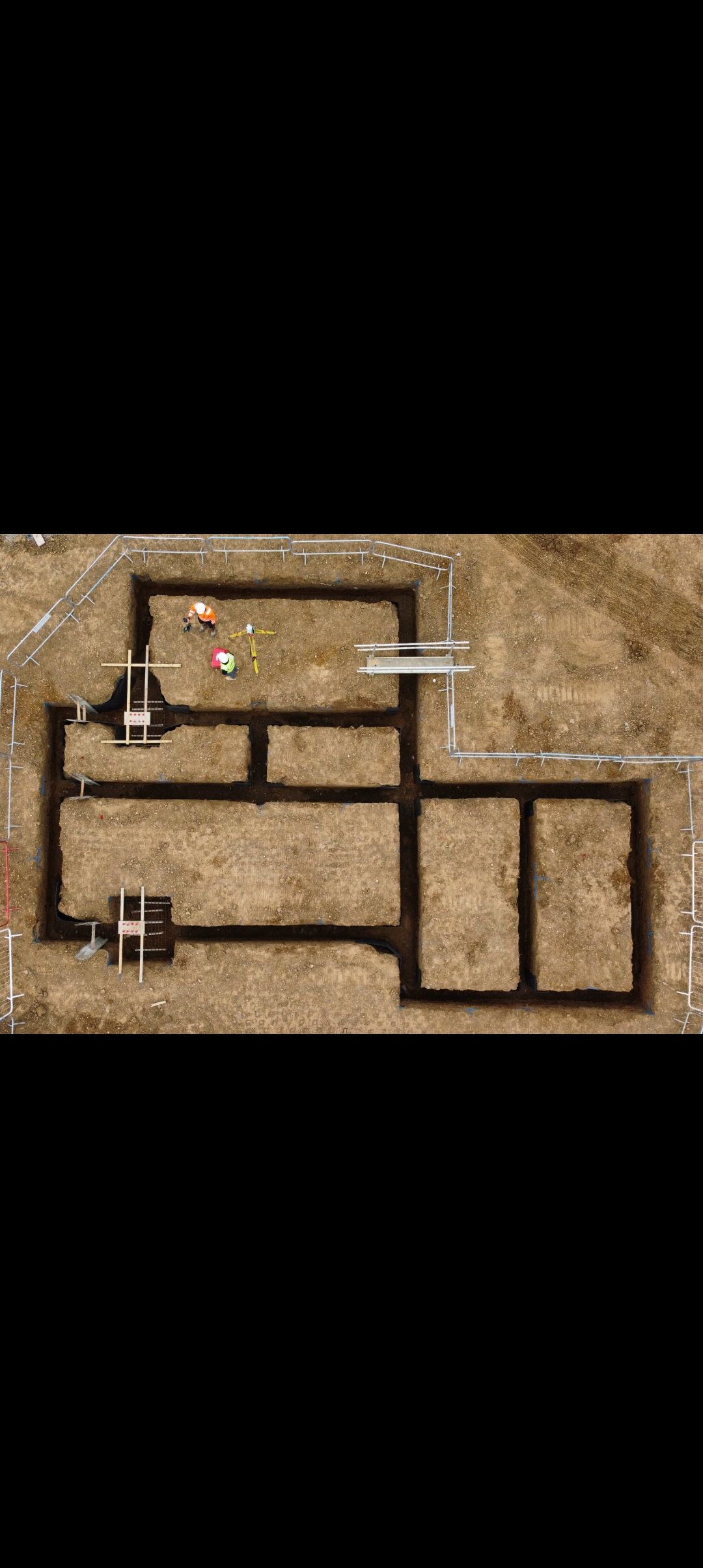
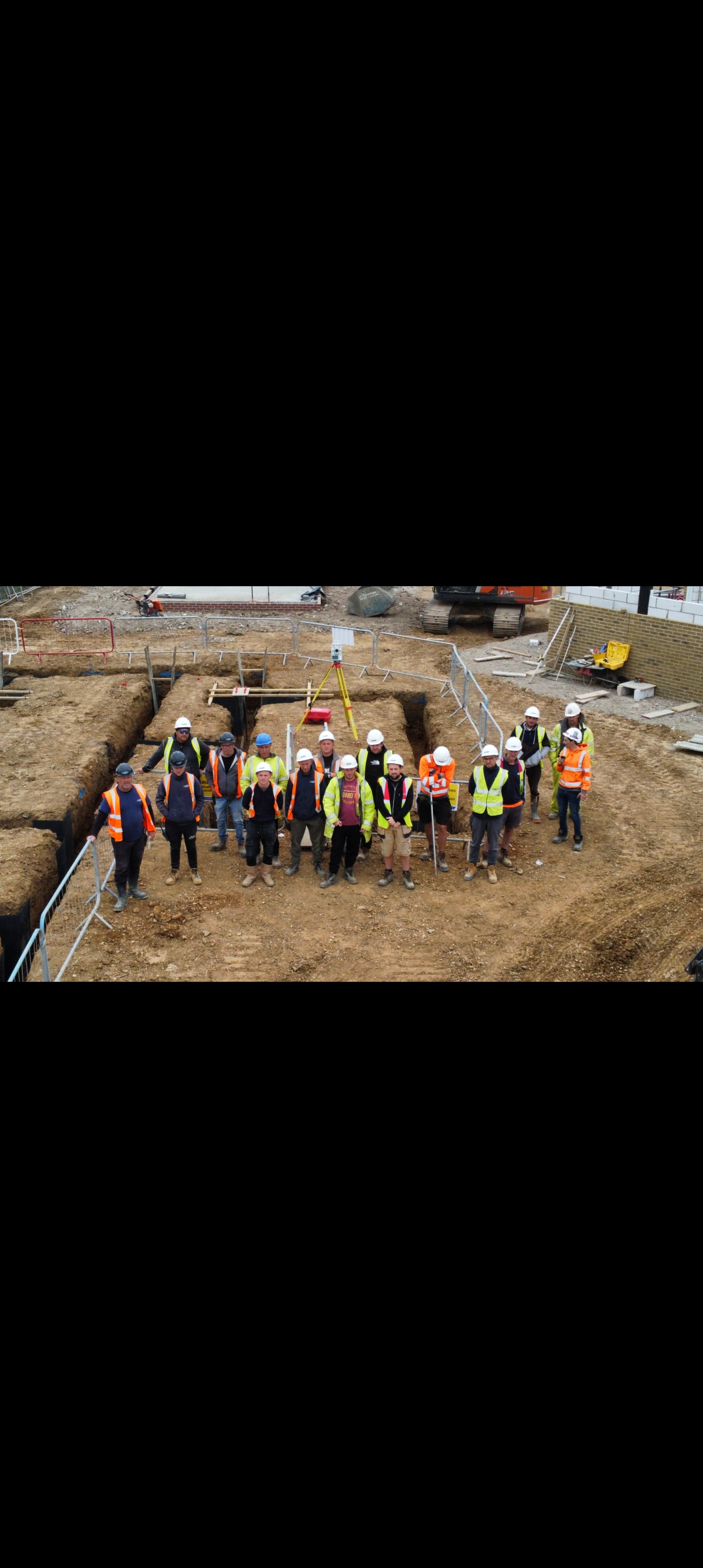
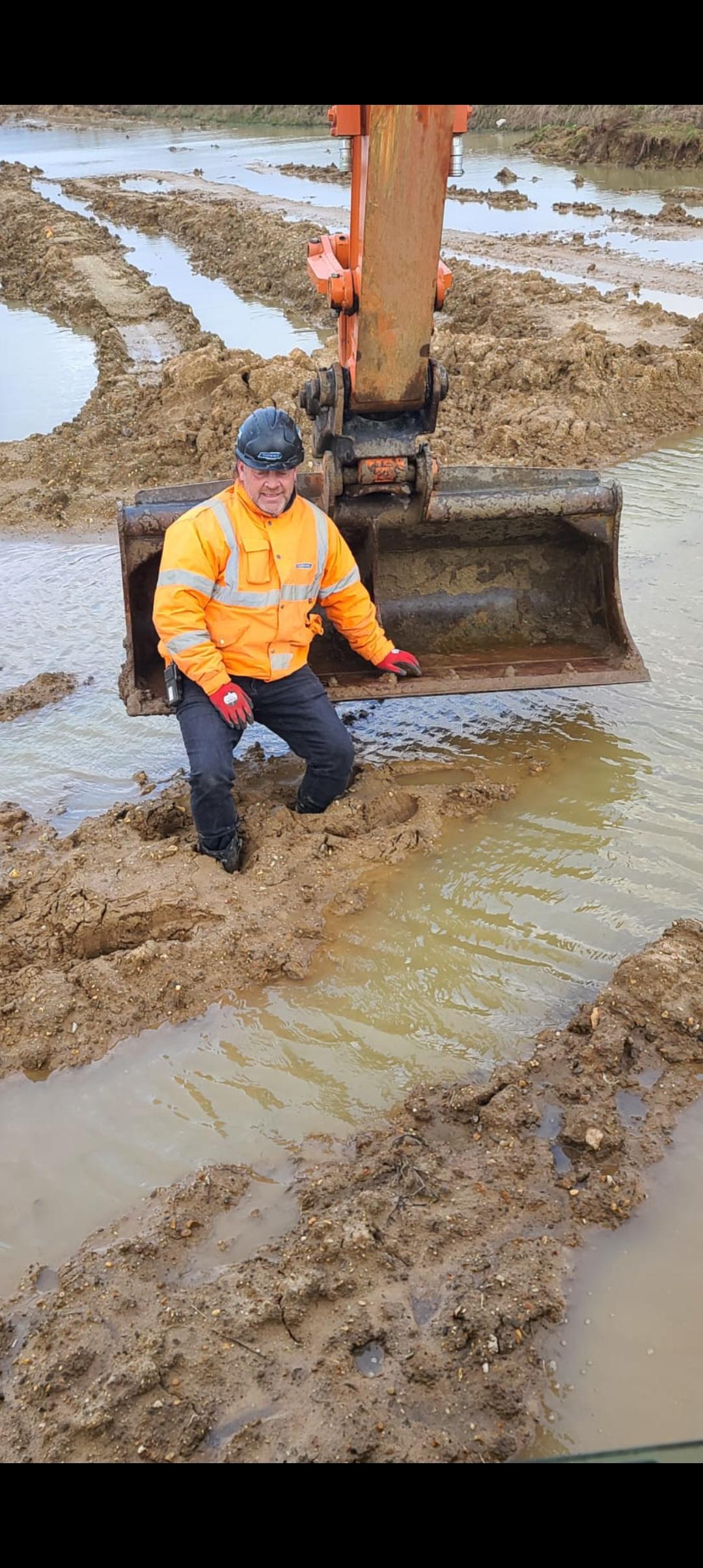
Heybridge, where I am currently, stands out. We’ve been nominated for Pride in the Job for three years running. The ground conditions are tough here — water and gravel, not easy at all.
On top of that, we had to get 160 foundations in within six months before the NHBC regulations changed. It was a real push, but we got it done with three days to spare. Considering the conditions, I was really proud of that.
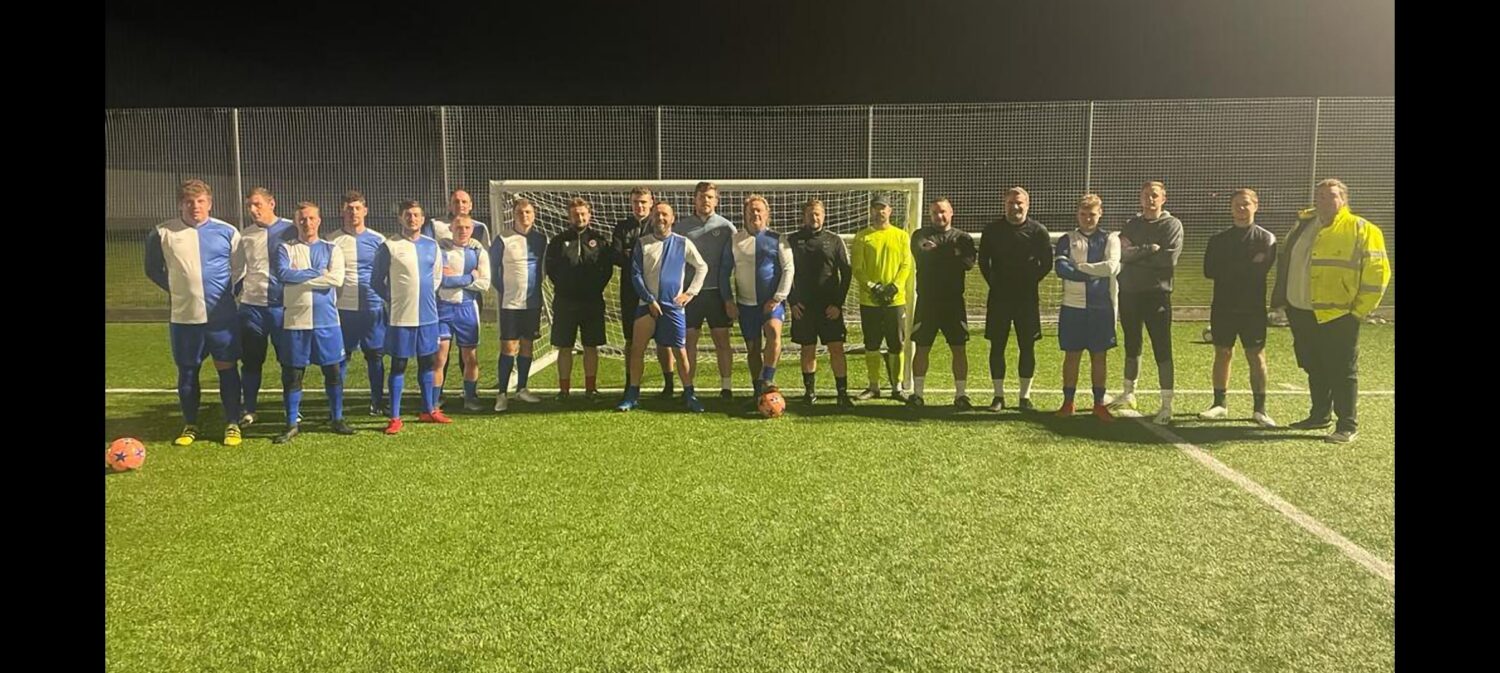
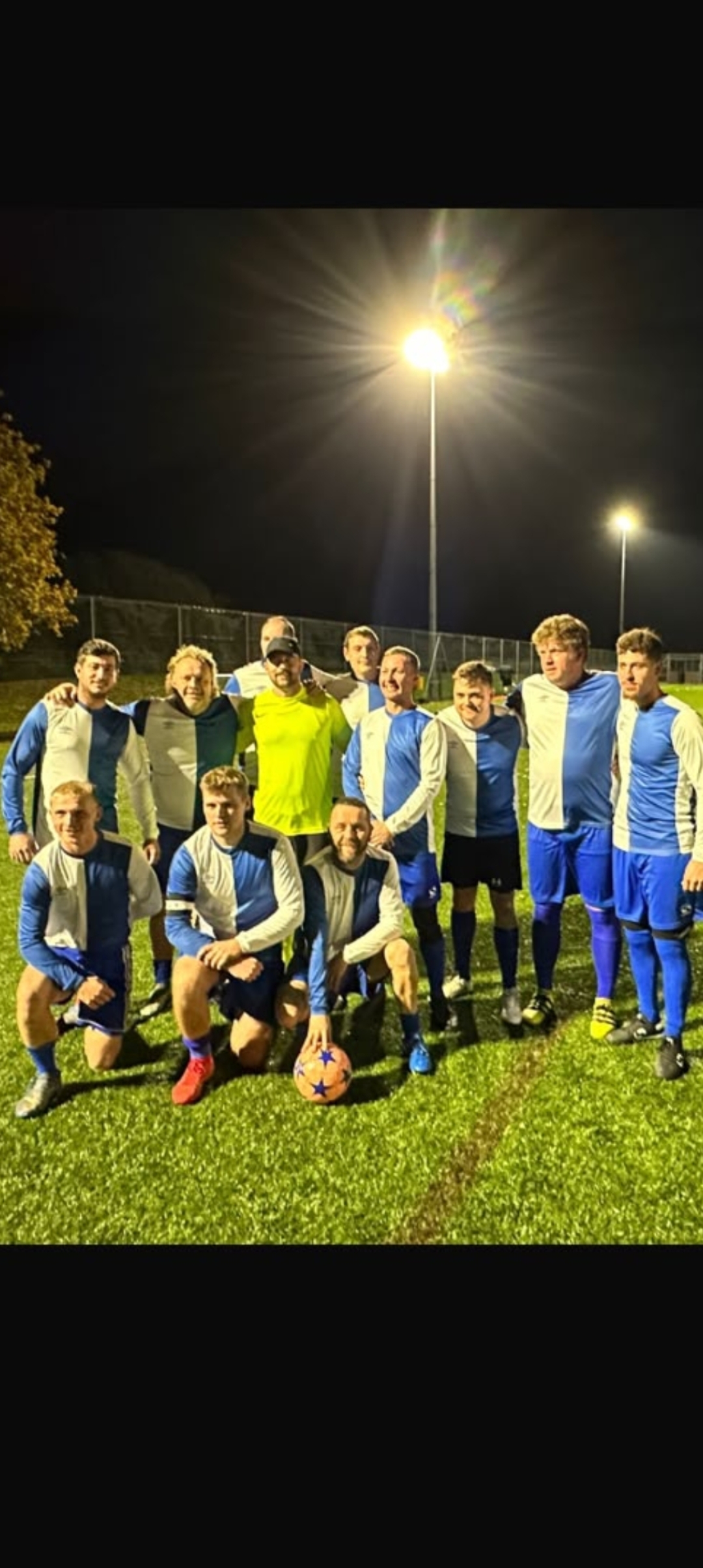
We’ve also had a bit of fun here —’Team Heybridge’ played a football match against the housebuilders, Vistry in October 2024… they beat us 11–1, so maybe not our finest moment!
What projects are you most proud to have worked on?
Truthfully, I’m proud of all of them — every job brings its own rewards and challenges.
A few stand out though. Bakers Mill in Sudbury, where I worked as a groundworker with Gary Rogers and we won our first NHBC Pride in the Job award — that was a big moment.
Harold Wood was a big one too—a multi-phase job. Then there were the two concrete frame projects at Chadwell Heath.
I genuinely enjoy every job though — no two are the same, and that’s what keeps it interesting.
Can you share a memorable story?
There’s been plenty over the years!
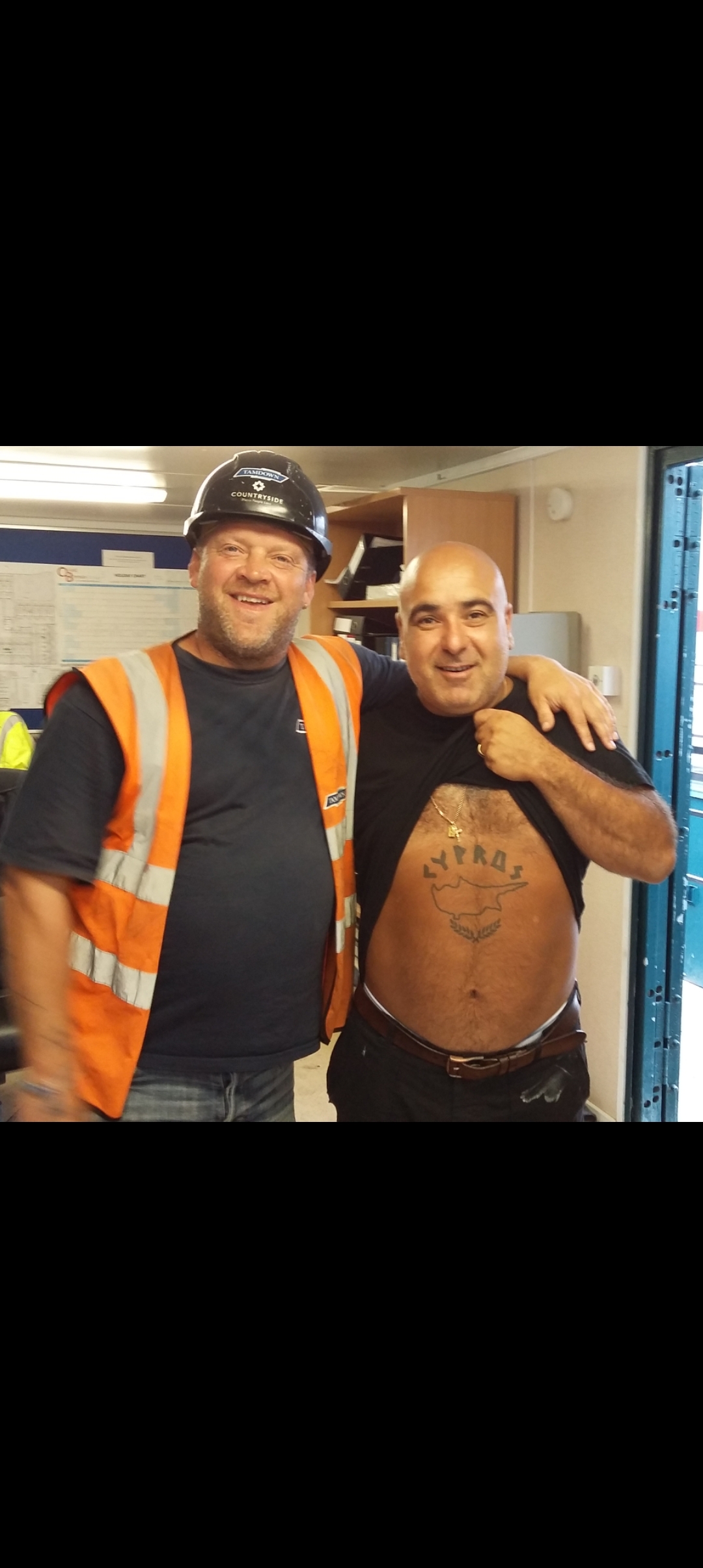
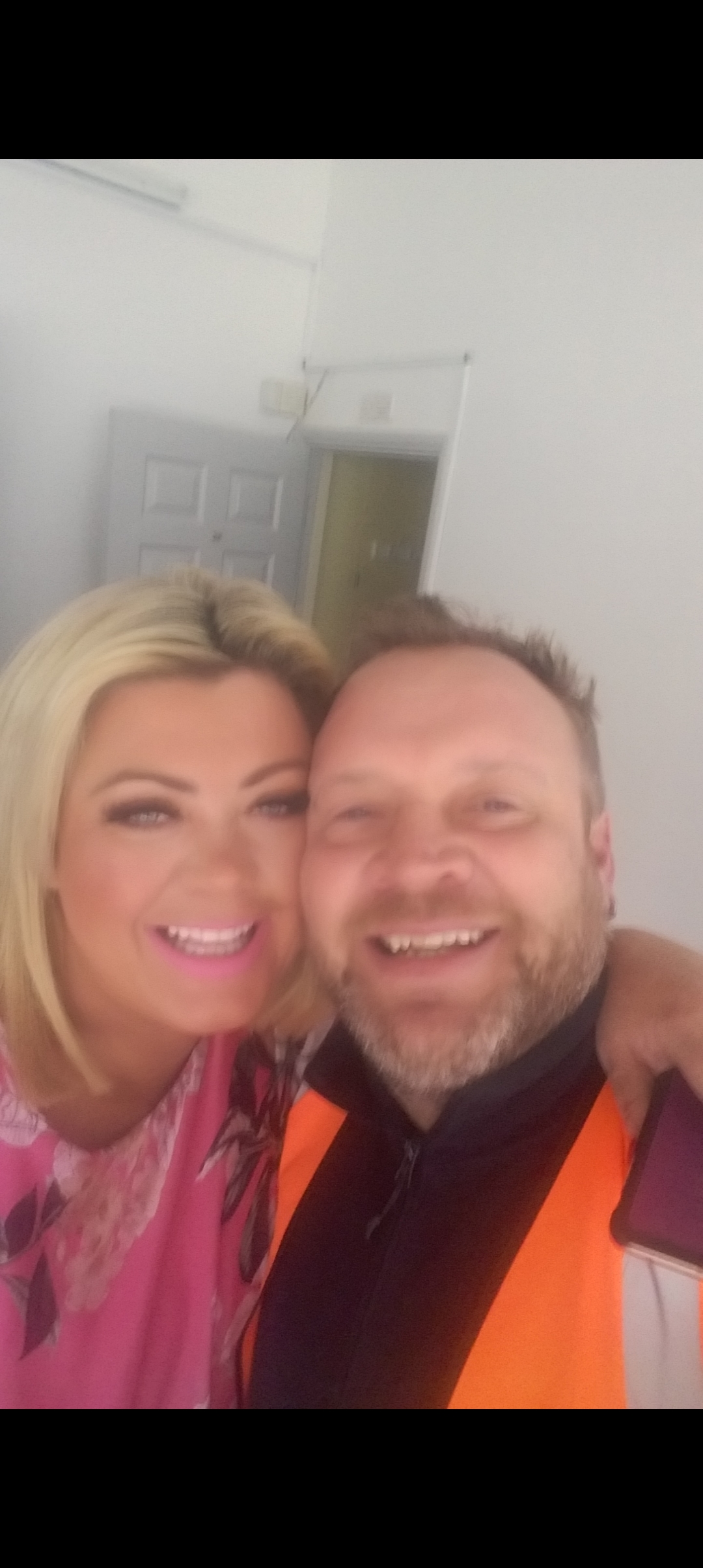
I met Gemma Collins at Harold Wood — which you don’t expect on a building site — and Stavros Flatley as well.
One that sticks with me though — Regan, our site supervisor at Heybridge once told me not to walk across a certain area because it was so muddy… I ignored him and got stuck. He still pulls my leg about that to this day!
What has been your most satisfying achievement with the company?
I’d say it’s about staying in the job and building relationships. I love being part of a team. I take pride in the connections I’ve built with the lads and just being a steady part of the company over the years.
How would you describe the company culture?
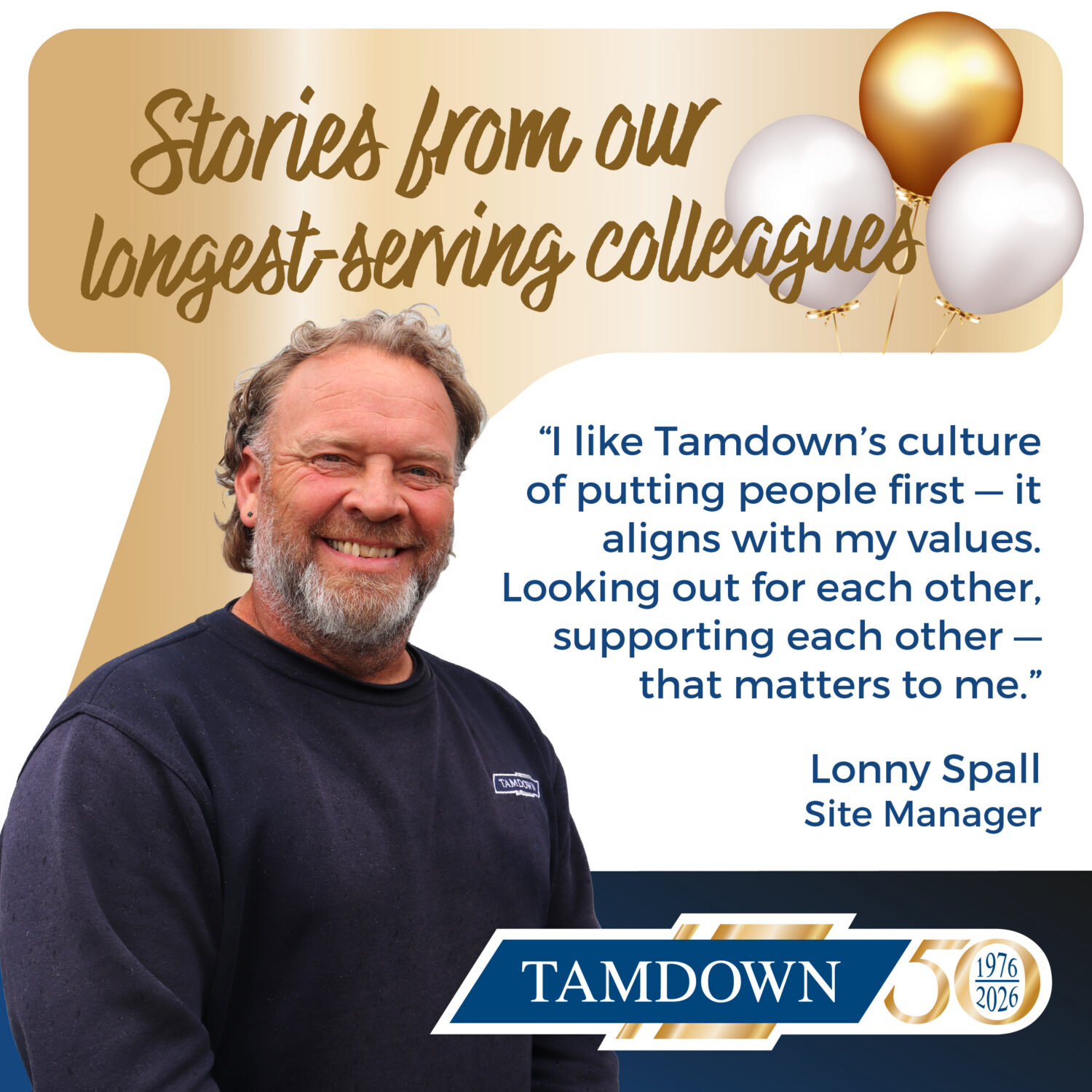
I like Tamdown’s culture of putting people first — it aligns with my values. Looking out for each other, supporting each other — that matters to me.
There are still good touches as well, like the wellbeing initiatives. Even something simple like having pizza delivered on site — it all helps bring people together.
Have you mentored others coming into the industry?
Yes — Regan’s the one that stands out straight away. He started as an apprentice on my site and has always been keen to learn and get stuck in.
I took him under my wing because I could see something in him. He had the right attitude, wanted to progress, and wasn’t afraid of hard work. Watching him grow into a site supervisor has been brilliant—I’m really proud of what he’s achieved.
What qualities make a great site manager today?
A bit of cheeky charm! But more than anything, you’ve got to genuinely enjoy what you do — I wouldn’t still be here if I didn’t.
Positivity is important, and so is empathy. You need to understand people and make sure everyone on site is alright. That’s what makes you approachable.
And don’t forget to have a laugh. If you can keep spirits up and build a good atmosphere, the whole site runs better.
What advice would you give to a youngster?
Stand tall, chest out, and don’t let things knock you down. Roll with the punches and just keep going.
Hard work and perseverance go a long way in this industry.
What keeps you motivated?
My family, 100%. My wife and kids are a big driver for me — I work hard to provide for them, and I’m a very proud dad, especially seeing how well they’re doing at school and my son in his new job.
Then there’s the dog, Hugo — our cockerpoo — he keeps things lively at home!
And of course, Tottenham Hotspur… although they don’t always help with the stress levels!
I wouldn’t come to work if I didn’t enjoy it. That’s a big part of what keeps me going.
You’re celebrating your 50th birthday in July which coincides with the company’s 50th year — what does this milestone mean?
It’s a big one! And with it being the World Cup tournament, it couldn’t have been better timing.
What advice would you give to someone starting out today?
Take pride in your work — no matter how small the job might seem. Even if you’re just laying a few slabs, do it properly and do it well.
That mindset will carry you forward.
Thank you to Lonny for sharing his stories and reflections from years gone by. We hope you’ve enjoyed this look back at our shared history. Be sure to keep an eye out for next month’s feature, where we’ll spotlight another long‑serving colleague and continue celebrating 50 years of dedication, growth, and community.
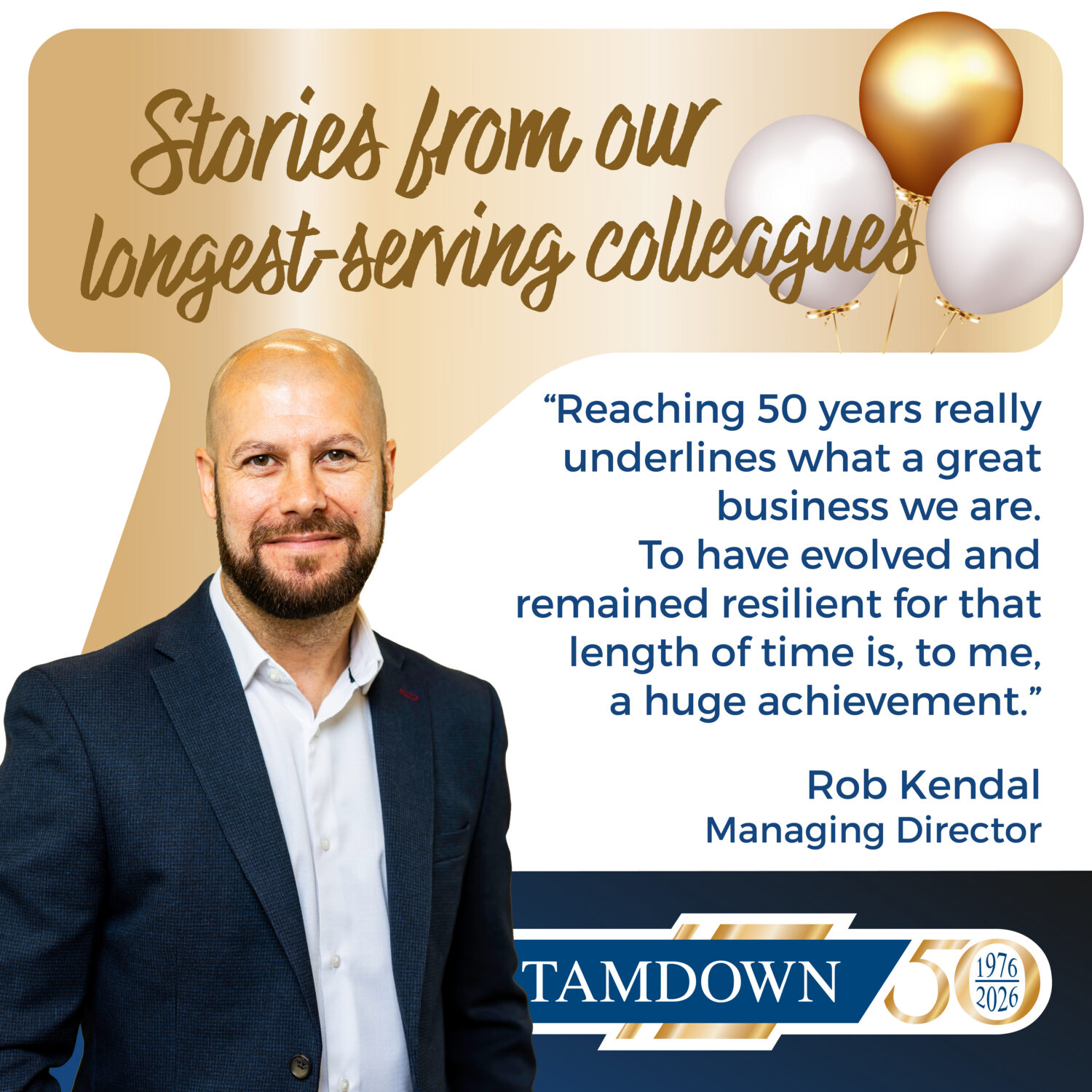
A Journey of 28 Years – Our Managing Director’s Story
As part of our 50th anniversary celebrations, we’re proud to share the sixth instalment of our Anniversary Spotlight Stories — and this one shines a light on Rob, our Managing Director.
With nearly 28 years at Tamdown, his journey is a true example of what can be achieved through hard work, ambition, and a willingness to learn. Starting out as an apprentice at just 17, he’s grown through the business, taking on new challenges, embracing opportunities, and developed into the leader he is today.
His story reflects everything Tamdown stands for — investing in people, creating opportunities, and building a culture where individuals can thrive and reach their potential.
From those early days on site to leading the business today, it’s a journey built on resilience, support, and a real passion for what we do.
What is your earliest memory of Tamdown?
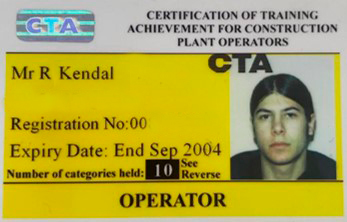
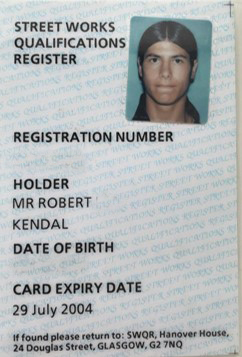
I joined Tamdown in January 1999 when I was 17, starting a CITB residential plant operator apprenticeship at Bircham Newton in Norfolk, which I completed in June. Straight out of school, I didn’t have a real passion for construction at the time and like most teenagers, I wasn’t sure what I wanted to do, but Mike Morris (former Nexus CEO) approached me about the apprenticeship programme.
Once I’d passed the course, I was straight into a machine and asked to clear the field at the bottom of Tamdown Way. Trevor Haylock (Lee’s Dad) was my mentor for the first few weeks.
I also remember my interview clearly, it was with Tom Mohan (Paddy’s dad), and he took the mickey out of me the whole way through. I had long hair at the time and he asked me if there were no hairdressers in King’s Lynn, where I lived!
The funny thing is, that interview took place in the same office at Tamdown Way that later became my office as MD, nearly 20 years later — so I really came full circle.
How has your career progressed over the years?
Early on, I used to see the leaders turning up to site in their flashy cars, and I’ll be honest, I wanted a bit of that. My first opportunity was when Mark Cain was advertising for an assistant in the Buying department, I went for it and was given a three‑month trial.
At the time, I didn’t think an office job would be for me, but it just clicked. I still remember making my first phone call to order fuel, I was so nervous. The lady on the other end must have sensed it, because she asked if I was new and whether it was my first call.
Between 2000 and 2002, I became a Buyer, and used to cover holidays as a Plant Buyer in the plant office. Then in 2003, when Tamdown set up the West region office in Basingstoke, I was asked to go there as an Estimator (the only Estimator, which meant long hours)!
In 2006, at just 25, I was asked to step up as Estimating Manager for the Maidenhead office. We relocated the Basingstoke Office and had 4 Estimators working there. Unfortunately we shut the office after the 2008 financial crisis and managed the workload back in Braintree.
From there, my career continued to develop — moving into a Quantity Surveyor role, then becoming Estimating Director in October 2013, followed by Commercial Director, then Commercial and Operations Director, and finally Managing Director in October 2018.
Did you imagine back then that you’d one day become Managing Director?
Not when I first joined. But as I settled into my office career, I always felt like I was doing a good job, and I developed a belief that one day I could run the business — I had that hunger and drive.
Before becoming Managing Director, I successfully completed my Certificate in Company Direction at the IOD and was fortunate enough to complete a Strategy and Change programme at Hult International Business School. I’ve always loved learning, and continuing to develop myself has been really important to me.
Tamdown played a huge part in that. It’s always been a very supportive environment, if you wanted to try something, the attitude was “go and do it.” I was never held back, and that trust allowed me to grow and develop.
I’m very aware of how much that environment nurtured me, and it’s something I’m keen to give back now and create the same opportunities for others to grow. Sometimes people just need that chance, and a bit of support, to realise what they’re capable of.
Has there been a moment when you felt especially proud to be part of the organisation?
I’ve always been proud to be part of a business that genuinely looks after its people. The culture has always stood out to me, it’s a company with a good heart.
That’s something I’ve felt from early on in my career, and it’s a big part of why I’m still here. It’s also what motivates me now — to give that back and make sure we continue to create the same kind of environment for others.
What are the biggest differences in how civil engineering works today compared to earlier in your career?
The biggest changes are around health & safety, processes and the amount of paperwork involved.
Decisions used to be made much quicker. There was more of a “gentleman’s agreement” approach, and you could just get things done. Now, there are far more sign-offs and layers to go through, which can slow things down. You can’t always make decisions on the spot in the same way, so there’s a real need to find better, more efficient ways of working within that structure.
How has technology transformed the way the business operates?
Massively. When I started, we were using fax machines and wages were paid in brown envelopes.
Now, everything is driven by data — dashboards, real-time information and performance tracking. You’ve got information and statistics at your fingertips.
What do you think has been the key to the company’s longevity over 50 years?
Evolution, without a doubt, being prepared to grow and adapt as the landscape changes. The business has always shown resilience, especially in an industry like housebuilding that has gone through plenty of ups and downs over the years.
A big part of that is staying level-headed and consistent through both the good times and the challenging periods. Ultimately, a business is only as good as its people — and if the people are resilient, the business will continue to thrive.
What advice would you give to someone aspiring to a leadership role in the industry?
Go for it. If you’re ambitious and prepared to work hard, there’s nothing stopping you.
You don’t have to be the most intelligent person in the room — but you do need a strong work ethic and a willingness to keep learning. Stay curious, be open to development, and keep pushing yourself to improve. That mindset goes a long way.
What does the company’s 50-year milestone mean to you personally, and what are your hopes for the next 50 years?
Reaching 50 years really underlines what a great business we are. To have evolved and remained resilient for that length of time is a huge achievement, and it reinforces everything I believe about the company.
Personally, I’m proud to have been part of it for 28 of those 50 years.
We’ve got some amazing people in the business, and that’s what excites me most, helping to set things up for the next 50 years — setting the right foundations so the business can continue to adapt, grow and succeed.
This edition leads us neatly into our birthday month in July, and Rob is looking forward to celebrating this milestone with everyone through a range of activities planned in the month.
Stories from our longest-serving colleagues: this month's spotlight - Dick Havelin
As part of our 50th anniversary celebrations, we’re shining a light on the people at the heart of Tamdown’s story. Each month, we’re hearing from some of our longest‑serving colleagues — those who have witnessed the journey first-hand, contributed to our success, and helped shape the hard-working culture we’re proud of today. Their stories not only reflect where we’ve come from, but also what continues to inspire us.
For our fifth feature, we spoke to Dick Havelin, Welder & Fabricator, who has worked at Tamdown Plant for over 26 years!
What made you choose welding as a career in the first place?
I’ve been a welder all my life and even had my own garage at one point. I’ve always enjoyed working with my hands and, to be honest, I’ve always mucked about with cars — it’s just something I’ve naturally gravitated towards. I actually came to work for Tamdown through Trevor, Lee Haylock’s dad, he was a good friend of mine — which is how it all started.
What is your earliest memory of Tamdown?
My earliest memories are working on the vans — servicing and repairs. There were around 110 vans at the time, so it kept me busy. I’d start at 6 in the morning and often finish around 7 in the evening, and I worked weekends as well. Trevor was a big part of those early days.
I also remember Mac and Tom, the original Tamdown owners, if they weren’t in the office or on site, they’d be in the Star pub in Braintree — you always knew they were there because they both had new Ford Granada’s, special editions, and they would be parked outside. It was very different to nowadays.
Did you imagine you’d still be here 26 years later?
If I’m honest, no — I always thought I’d retire earlier. But life has a way of changing plans, and circumstances meant I carried on working. Looking back now, I’m glad I did.
What skills are more important now than they were 20+ years ago?
My role has changed quite a bit over the years. I don’t work on the vans anymore. I focus on welding and fabrication now, mainly repairing buckets, replacing blades, and manufacturing new ones when needed. It’s more specialised now.
One of the challenges today is that there aren’t as many people coming through with strong welding skills. I’ve been fortunate to work with a great apprentice in the past, Callum, who was excellent. It’s important that knowledge and experience like that is passed on to the next generation.
How has the machinery you work with changed over the years?
It’s changed massively. We used to do everything on the vans ourselves, but now you don’t really touch them — you need a laptop to diagnose most faults. It’s a very different way of working compared to the hands-on approach we had years ago.
Has technology made the job easier, harder, or just different?
I’d say it’s just made it different more than anything. Sometimes it can be frustrating because you might know exactly what the problem is, but you still need a laptop to confirm it.
From a fabrication point of view, though, there have definitely been improvements. We used to do a lot of gas cutting, whereas now we use plasma cutters, which are much more efficient. That said, I still like to think I’m a bit old school — but if it works, it works.
Is there a repair or challenge you’ll never forget?
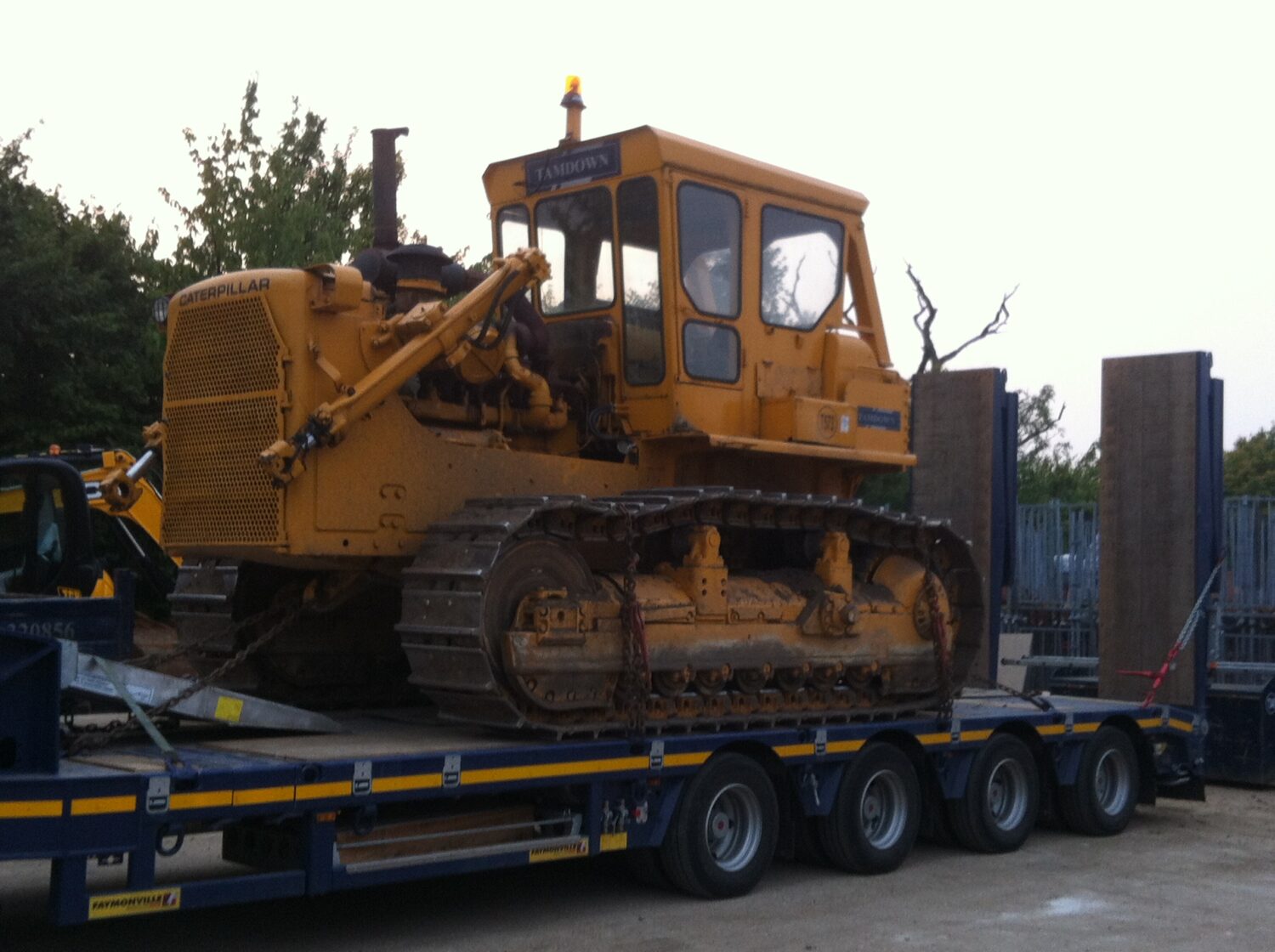
One job that really stands out was a repair on a D8 bulldozer and its box (the attachment used for moving and scraping earth). We had quite a few of those machines back in the day, nowadays the machines have GPS-controlled equipment.
This particular machine had been working at Beaulieu Park when the rams on the box collapsed, twisting the main section. A few engineers came out to look at it and said it was beyond repair and a complete write-off. But John Crick, the Tamdown MD at the time said, “We’ll get Dick to repair it,” and that’s exactly what I did.
We brought it back to the yard, laid everything out, and I rebuilt the whole front end. It took about a month in total. When it went back out, I’d managed to take the twist out and get it fully operational again. It was a challenging job, but one I’m still proud of — especially as it was over 20 years ago now.
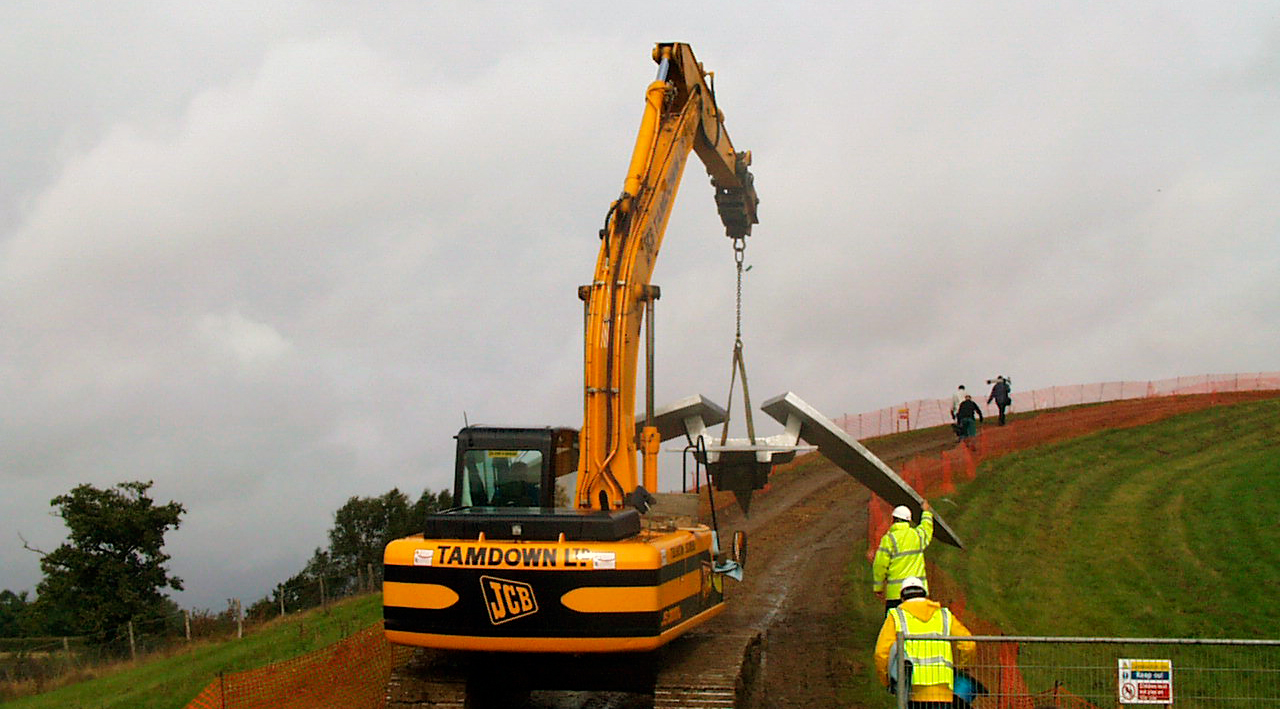
If you’re local to Braintree, you’d be interested to know that Tamdown helped form the earthworks for the Great Notley country park, which people will now see as the hill and surrounding landscape. They also cast the concrete plinth on the top of the mound and transported and placed the bird sculpture (twice, the first effort was stolen and dragged a couple of miles across the fields!).
What piece of kit have you always enjoyed working on?
To be honest, I’ve always just enjoyed the job itself. It used to be very varied, which meant no two days were the same, and that’s what I liked about it. Working on different pieces of kit and facing new challenges kept things interesting.
What achievement are you most proud of in your time here?
Repairing the box on the D8 is definitely one I’m most proud of. It was a real challenge, and to bring something back that others thought was beyond repair was a great feeling.
I also take pride in the smaller things — doing a neat, tidy job and knowing it’s been done properly. And mentoring apprentices has been a big part of it too. Passing on my skills, particularly in welding, and seeing someone progress and develop — it’s rewarding.
Is there a job where you stood back at the end and thought, “That’s a proper result”?
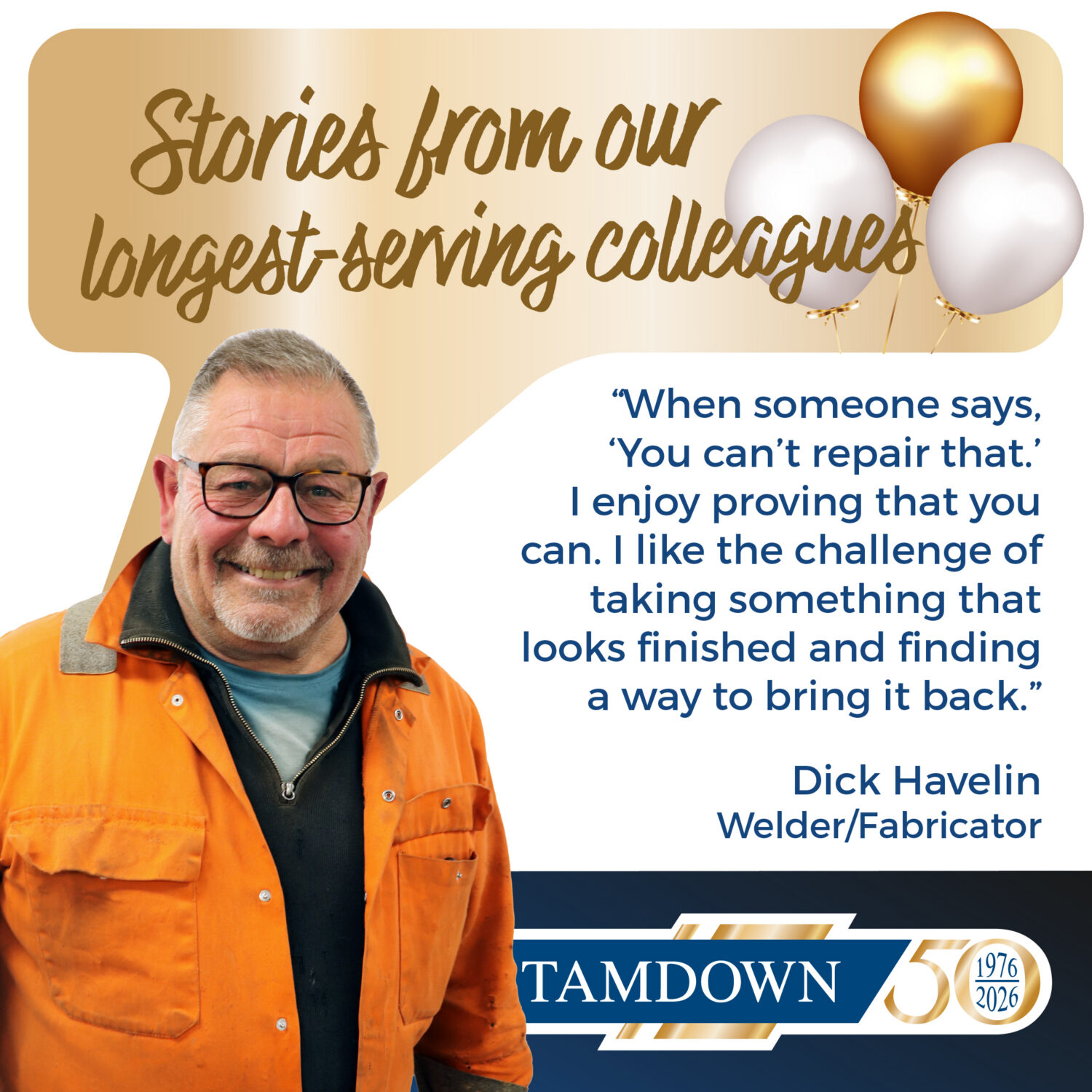
A lot of the time it’s when someone says, “You can’t repair that.” I enjoy proving that you can. I like the challenge of taking something that looks finished and finding a way to bring it back. That’s when you really stand back and think, that’s a proper result.
What keeps you motivated after so many years?
I genuinely enjoy my job, which makes a big difference. It’ll be a big change when I do retire — I think I’ll miss it more than I expect.
How important is teamwork?
These days I tend to work on my own quite a bit, but it’s always been about the people. In the early days, it felt very family-oriented. You had characters like ‘Ginger Tom’ who would always come through and check how you were getting on. Mick and Keith were very old-school as well — it was a different atmosphere.
I remember Mandy bringing round the wages and paperwork — everyone would come back to the office to collect their pay, usually on a Tuesday, and we would often end up in the pub. It made things more social and brought everyone together.
How has the culture in the workshop changed over the years?
In some ways, it hasn’t changed much at all. The values are still the same —hard work and getting the job done properly.
What advice would you give to an apprentice starting today?
If you’re going to learn a trade, learn it properly. In welding, there are several disciplines — MIG, MAG, manual arc (stick welding), TIG (Tungsten Inert Gas) —and some of the older methods, like gas welding, are becoming a dying art.
My advice would be to start with the basics of engineering first—milling, drilling, grinding — then move on to welding. After that, learn how to read drawings properly. Build your knowledge step by step.
What’s something you’ve learned that you wish you’d known earlier?
I did an apprenticeship myself, which set me up well. Once you’ve built something as complex as, say, a car transporter, there’s not much that intimidates you after that. It gives you confidence in your ability.
There’s a real sense of pride in building something from scratch — I used to even put my name on the back of projects I’d worked on.
Looking back, what stands out most from your time at Tamdown?
There are a lot of good memories. From the early days working on the vans, to busy workshops, to challenging repairs — it’s been a varied career.
For me, it’s the combination of the work, the people, and the jobs you’ve been part of that really stands out. And knowing you’ve played your part over the years — it means something.
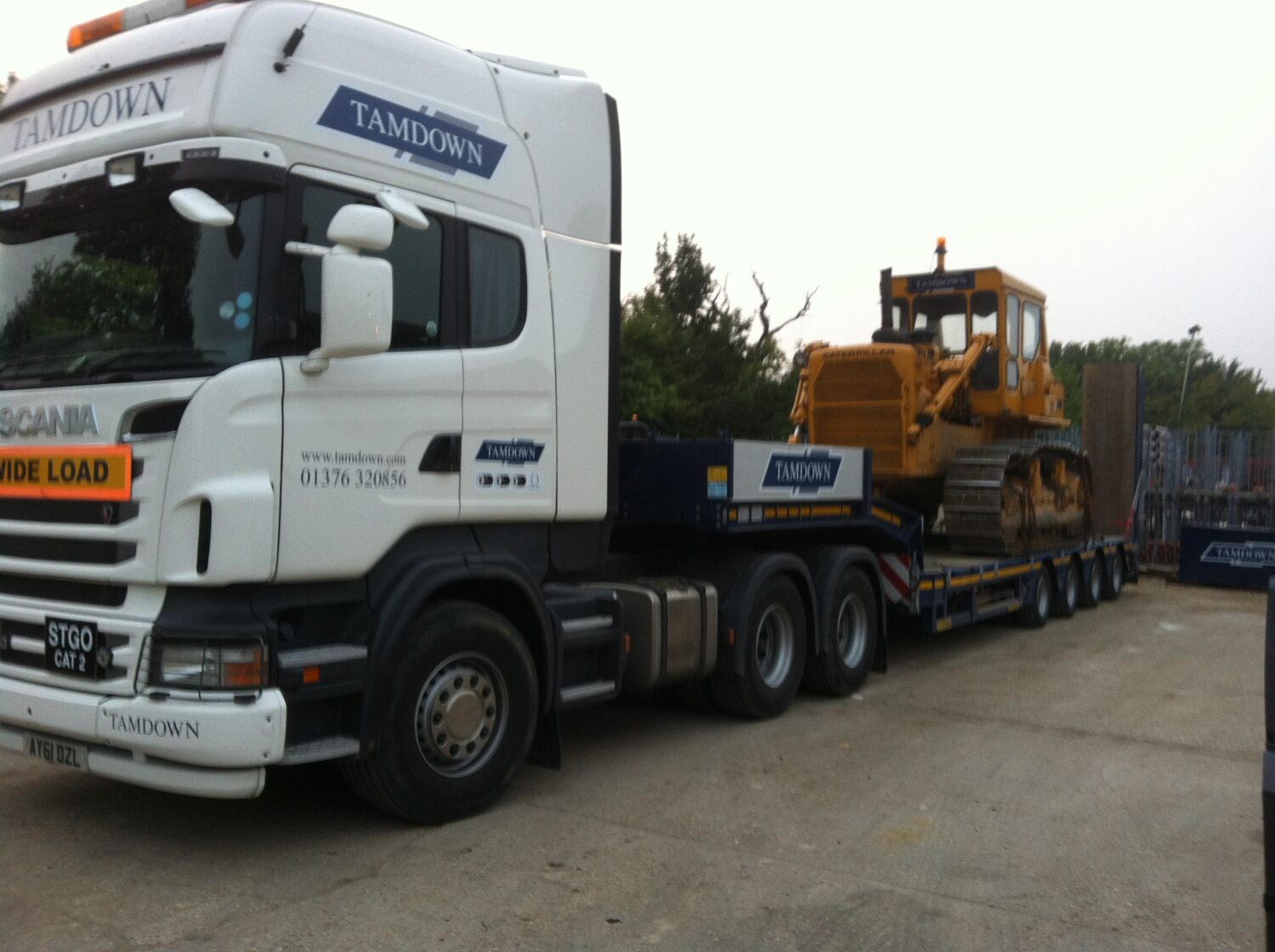
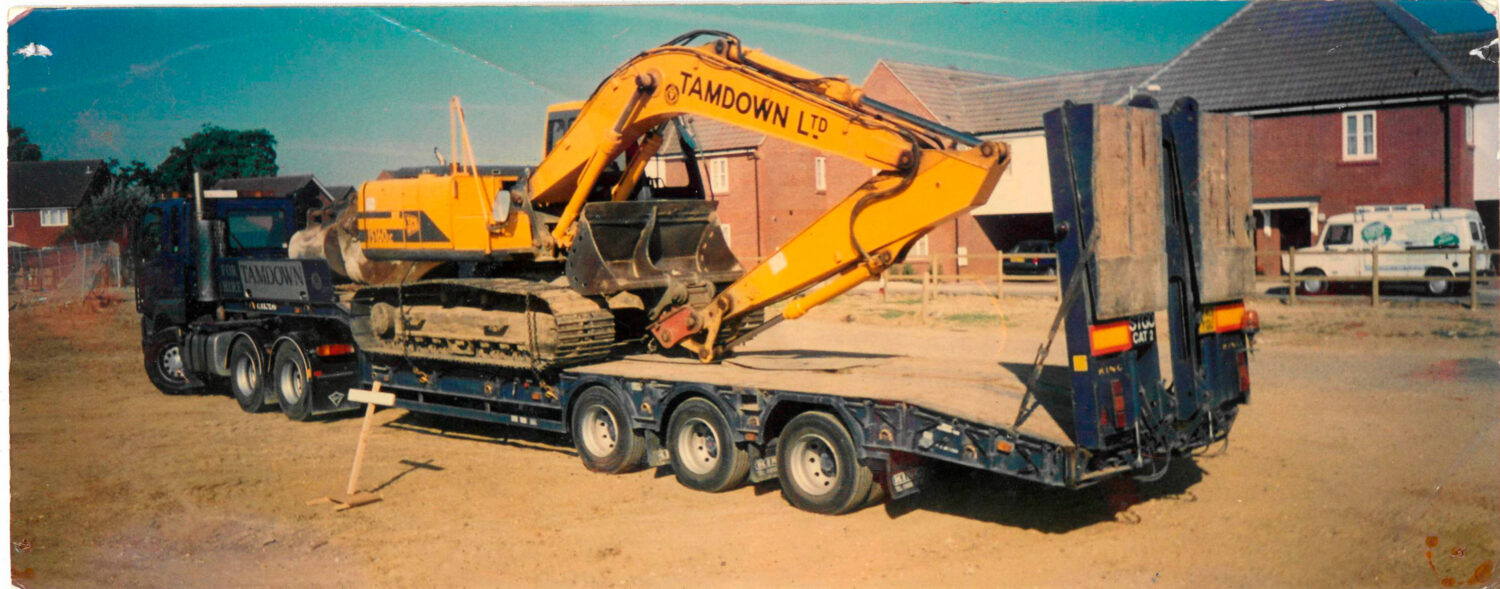
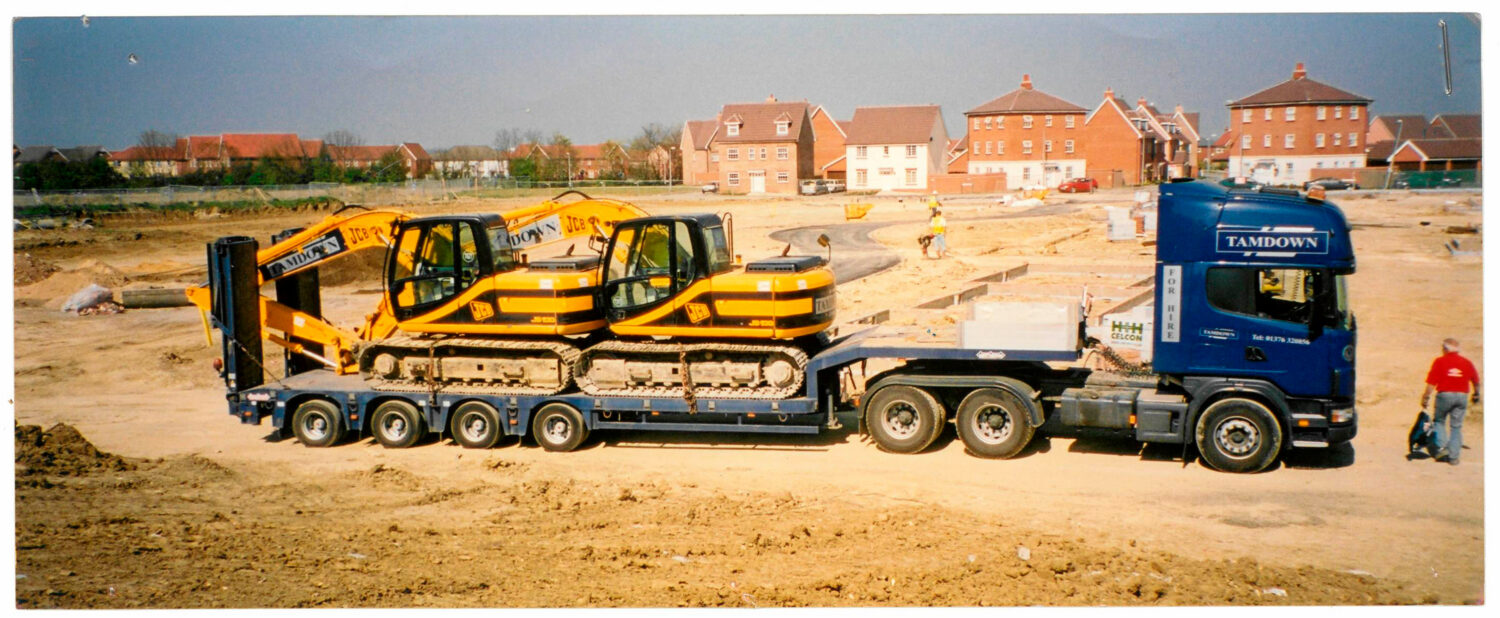
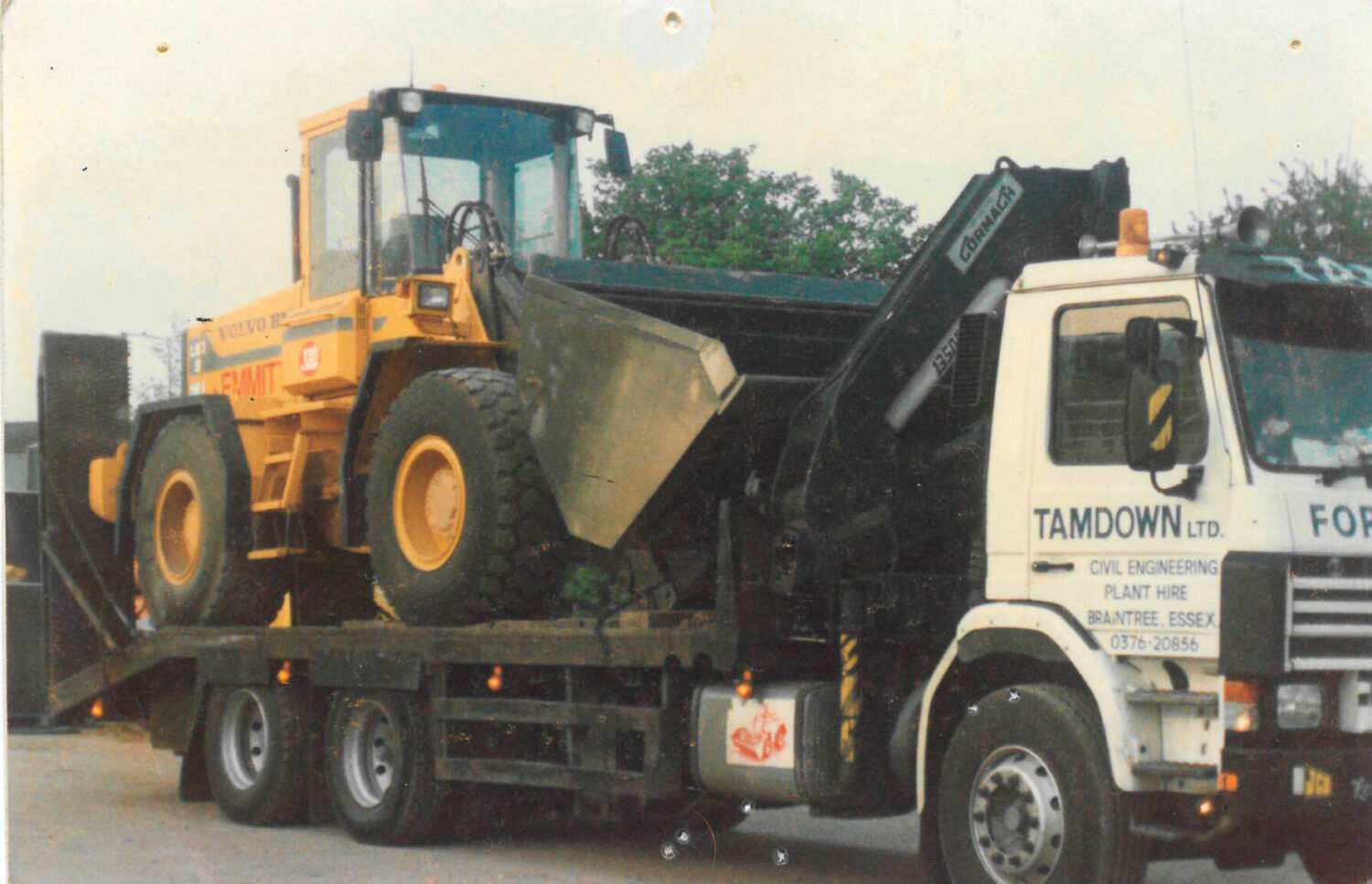
Just some of the machinery Dick has worked on during his time with Tamdown…
Bird of Freedom being installed in Great Notley Country Park in 2000
Thank you to Dick for sharing his stories and reflections from years gone by. We hope you’ve enjoyed this look back at our shared history. Be sure to keep an eye out for next month’s feature, where we’ll spotlight another long‑serving colleague and continue celebrating 50 years of dedication, growth, and community.
Stories from our longest-serving colleagues: this month's spotlight - Dave Butler
As we continue celebrating Tamdown’s 50th anniversary, we’re proud to keep shining a light on the people who have helped build our story. Each month, we’re sharing reflections from some of our longest‑serving colleagues — those who’ve seen the business evolve, played a vital role in its success, and helped shape the culture we value today. Their experiences offer a meaningful look back at where we’ve come from, while reminding us what continues to drive us forward.
For our fourth feature, we spoke to Dave Butler, Site Manager, who has also been working with Tamdown for nearly 28 years!
What was your first role and how has it evolved since then?
I started working at Tamdown back when it was owned by Tom and Mac, and I’ve seen the ownership change a few times since. I was a machine driver in those days.
Back then, machine drivers had a lot of control over the job. We were the ones on the ground with the paperwork, which is quite different to how things are now, where everyone is expected to be able to read the drawings.
I remember one day Keith Breen saying to me, “Look after these few blokes for a few days.” I told him I couldn’t do both jobs—drive the machine and manage the lads—so he found another machine driver! From that point on, that was it really, I’ve been managing sites ever since.
I also remember being sent to Tamdown’s first ever project in Cambridge. Paddy Mohan was my Contracts Manager at the time. Over the years, I’ve worked with many of the current Tamdown Contracts Managers and Site Managers and have seen them progress and develop along the way.
What makes a site run smoothly in your eyes?
Putting the right people, in the right place, on the right job. As a Site Manager you’ve got to know the capabilities of your team – you need good, hardworking people that you’re able to trust. The site is easier to manage if you know everyone is doing what they’re supposed to be doing.
What’s the biggest lesson you’ve learnt whilst being a Site Manager?
Understanding people’s capabilities is important – you get far more out of them when you know what they can realistically deliver. You’ve got to be tough, but it has to be balanced with give and take.
I remember working on a job where it had been snowing heavily for days, and we had been pushing the team hard to complete a task. By the final afternoon the conditions were really bad, and there was a discussion about sending the lads home unpaid. I made the case for keeping them on full pay, because I recognised the effort they had put in and the difficult conditions they had been working under.
You’ve got to be approachable too. When you move from job to job, the early stages can be challenging as you take time to get to know the people on site. But if you stay visible, present, and accessible, you build trust and develop strong working relationships.
What has been your biggest achievement that you are most proud of during your time with Tamdown?
I enjoy sharing my knowledge and experience, and over time I’ve passed those skills on to others around me. I’ve mentored a number of Tamdown’s Site Managers, including my son, Matt and more recently Tyler Grove. I’d say that’s what I’m most proud of.
Any funny or unexpected moments that still make you smile?
I do remember a time when we were working near Hobson’s Brook in Cambridge, putting a bridge across. One of our Site Managers, though I won’t be naming names — decided he could easily jump across. As he ran up to it, you could see him getting nervous, and the next thing we knew he went straight in. It still makes me chuckle to this day.
What do you still enjoy about your role and what keeps you motivated after so many years?
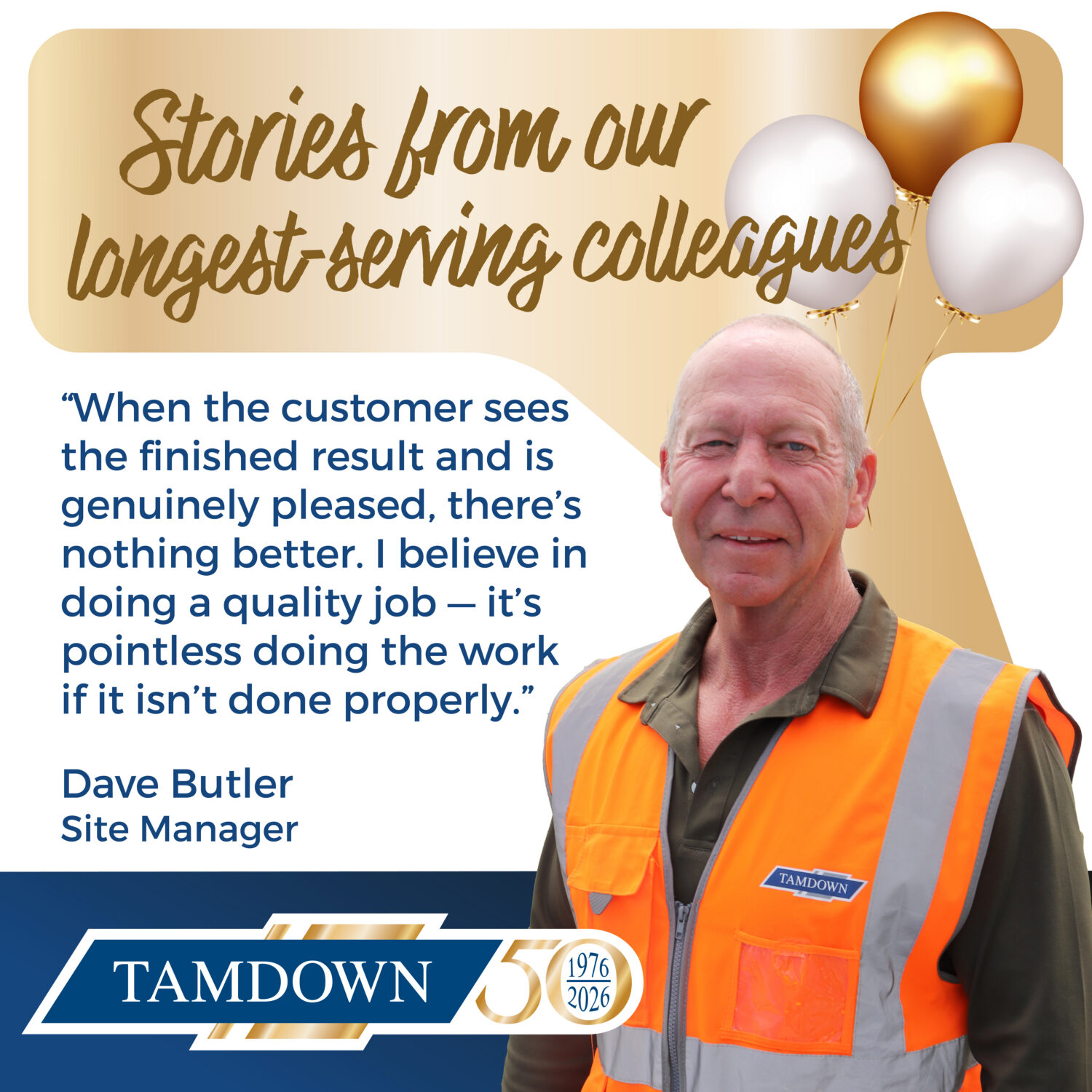
I take real satisfaction in finishing a project and walking away knowing I’ve delivered what I set out to deliver. When the customer sees the finished result and is genuinely pleased, there’s nothing better. I believe in doing a quality job — it’s pointless doing the work if it isn’t done properly.
I’ve got five children — three of whom also work for Tamdown in varying roles— and five grandchildren, and I work hard for them. I also make no secret of the fact that I enjoy my holidays too.
What advice would you give an apprentice or junior staff to progress?
Always strive to do your best and work hard. When you approach your work with commitment and give it your full effort, people notice. That recognition leads to trust, and in time, it opens the door to new opportunities.
Thank you to Dave for sharing his stories and reflections from years gone by. We hope you’ve enjoyed this look back at our shared history.
Thank you to Dave for sharing his stories and reflections from years gone by. We hope you’ve enjoyed this look back at our shared history. Be sure to keep an eye out for next month’s feature, where we’ll spotlight another long‑serving colleague and continue celebrating 50 years of dedication, growth, and community.
Stories from our longest-serving colleagues: this month's spotlight - Lee Haylock
As we mark Tamdown’s remarkable 50th anniversary, we’re taking a moment each month to look back at the people who’ve helped shape our story. Throughout the year, we’ll be sharing memories and reflections from some of our longest‑serving colleagues — those who’ve witnessed our evolution first-hand and contributed to the culture, resilience, and success we celebrate today. Their stories not only honour our past but also inspire the road ahead.
For our third feature, we spoke to Lee Haylock who has been working with Tamdown nearly 28 years!
What is your earliest memory of Tamdown when you started?
My memories of Tamdown actually begin long before I worked here myself. My dad worked for the company too, working as a Welder/Fabricator in the workshop and I would often join him on weekends.
One of my strongest early memories is from the late 1980s, when I was in my teens. My dad took me to the area that would eventually become Great Notley Country Park – before Great Notley Village or the Notley by-pass existed. I remember standing there, watching Tamdown’s Cat D8 dozer at work. It was enormous, one of the biggest machines they had at the time and it was cutting and shaping the balancing ponds. The noise, the dust, the sheer scale of it all left a real impression on me. I knew then that I wanted to be involved in the construction industry.
I later joined Tamdown as an Engineer on various sites in Kent after leaving university. The commute was long, so when an opportunity came up for a Technical role in the Braintree office, I jumped at it. From there, I eventually moved into the Commercial department, so I have been a QS for 20+ years.
How has the role of QS evolved since you started?
I’d say the biggest changes have come from technological advances, which have transformed the way we work. We now have access to far more information – and we can get it instantly. When I first started, there was no internet on site, everything was handwritten, then you went back to the office and posted a hard copy of the valuations to the customer.
Nowadays, all the information you need is right at your fingertips. It allows us to be proactive rather than reactive. We can now look towards the end of life costs rather than just what was spent yesterday.
Collaboration with our operational colleagues has also improved, which makes a significant difference to how effectively we can plan, forecast and deliver.
What part of your role gives you the most satisfaction?
For me it’s all about the small wins – the achievements that come from the combination of moving parts. I get a real sense of satisfaction from seeing how each decision, each bit of collaboration, each piece of shared information contributes to the bigger picture. It’s more about the cumulative success we create as a team and that comes from supporting each other, and finding better ways collectively.
Do you have a memorable negotiation or breakthrough moment?
Generally, due to the nature of our contracts, there isn’t much room for negotiation. However, one experience stands out. We were securing an RC frame contract in Cambridge for a customer who was working with a high-profile end client. The contract was quite onerous – this big client feeding down through the chain. I was a bit sceptical on how things would go, but the customer was open and willing to work through the details with us. We managed to reach a mutually agreeable position. It was a challenging process but an enjoyable one to be part of.
What advice would you give to an apprentice QS joining the company?
Spend as much time as possible on site – watch, listen and really take in what we do and how we do it. Observe how teams work together and how we interact with other trades. Understanding the practical side of the job is invaluable. Be inquisitive, ask questions and don’t be afraid to get involved.
I also believe that nothing beats face-to-face communication. You can pick up far more when you’re sitting across from someone – their body language, their reactions, things that you just don’t get through a screen. So speak more, message less.
What keeps you motivated after so many years?
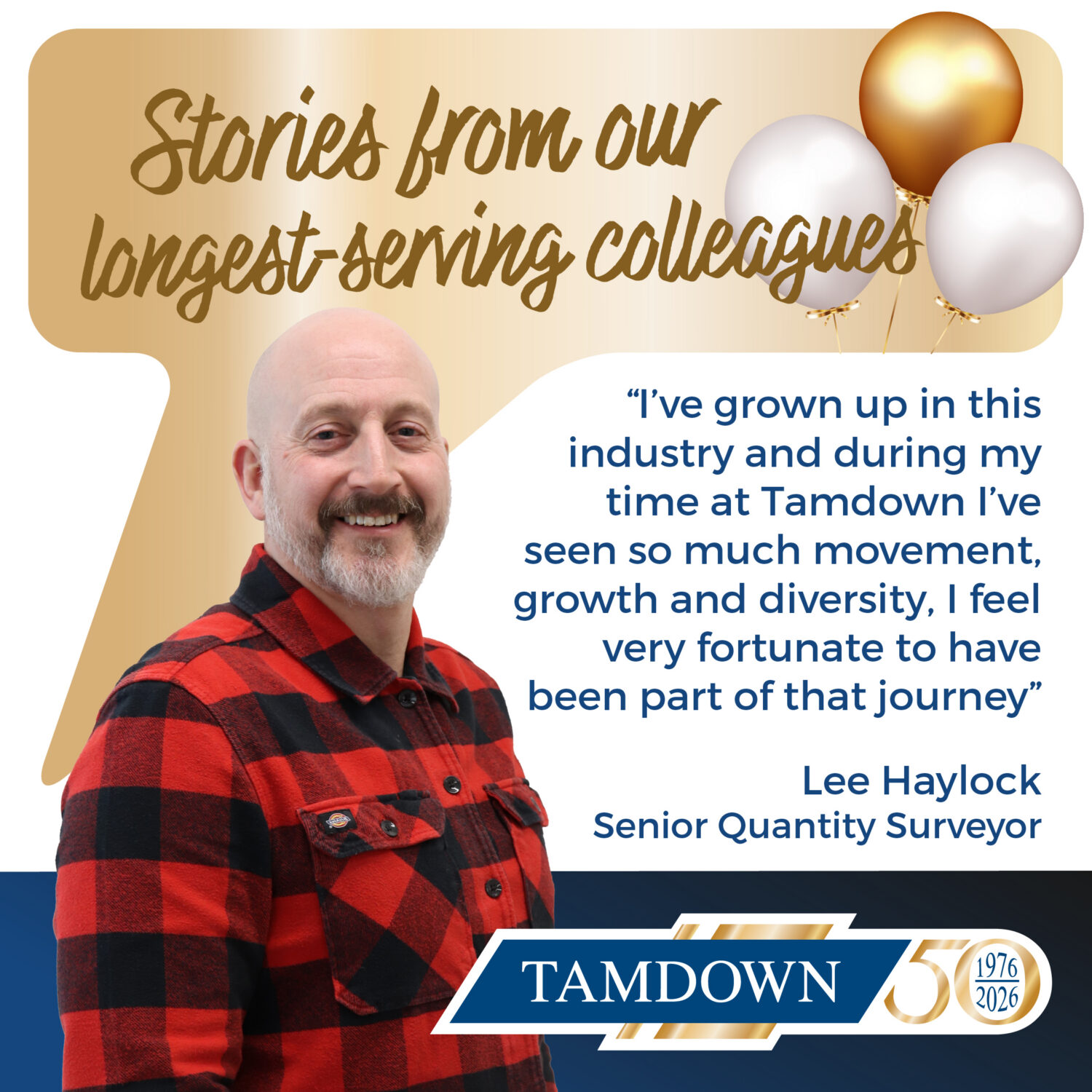
I’ve grown up in this industry and during my time at Tamdown I’ve seen so much movement, growth and diversity, I feel very fortunate to have been part of that journey. It genuinely feels like family here – I enjoy the work I do, and I enjoy the people I work with. That combination is what keeps me motivated year after year.
Thank you to Lee for sharing his stories and reflections from years gone by. We hope you’ve enjoyed this look back at our shared history. Be sure to keep an eye out for next month’s feature, where we’ll spotlight another long‑serving colleague and continue celebrating 50 years of dedication, growth, and community.
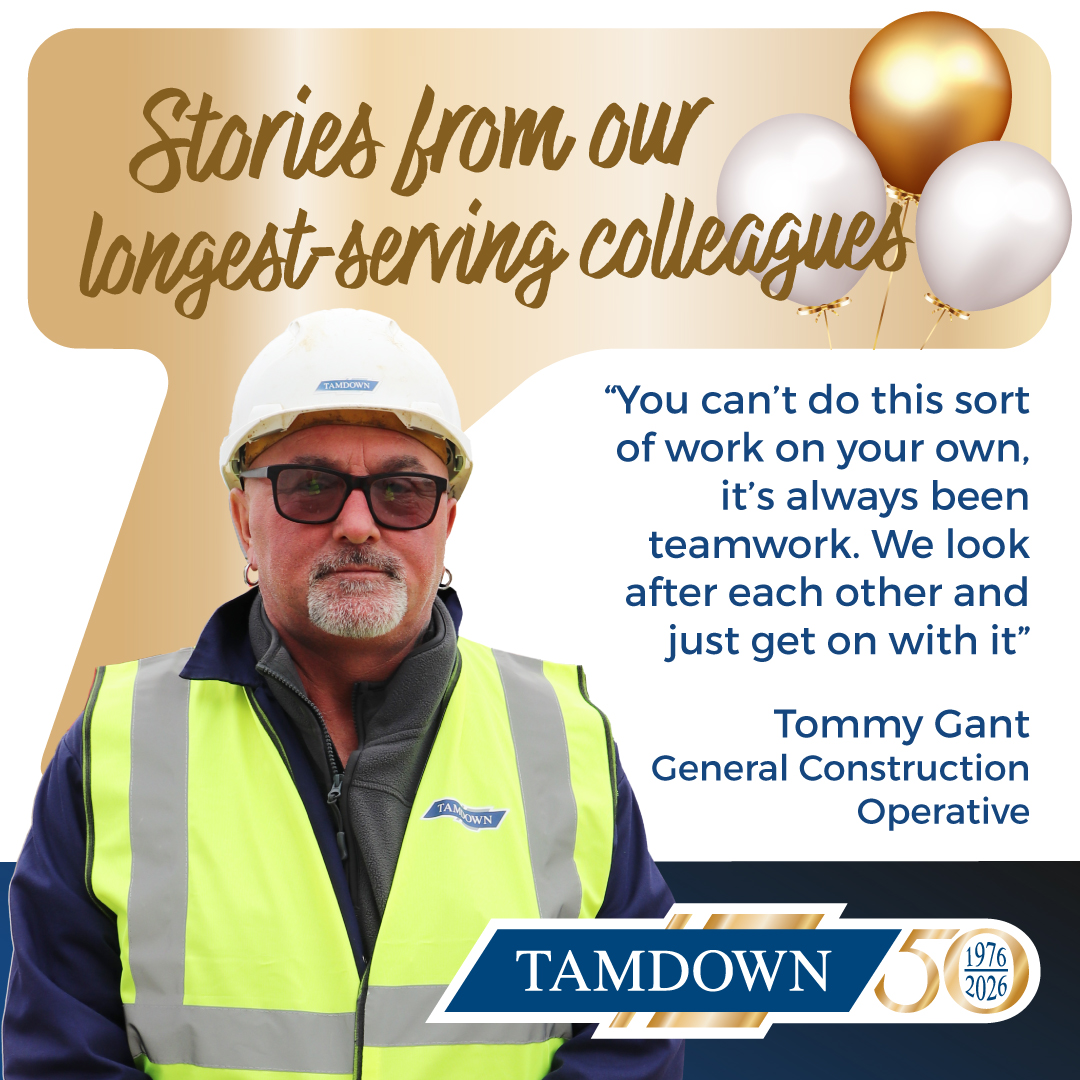
Stories from our longest-serving colleagues: this month's spotlight - Tommy Gant
As we mark Tamdown’s remarkable 50th anniversary, we’re taking a moment each month to look back at the people who’ve helped shape our story. Throughout the year, we’ll be sharing memories and reflections from some of our longest‑serving colleagues — those who’ve witnessed our evolution first-hand and contributed to the culture, resilience, and success we celebrate today. Their stories not only honour our past but also inspire the road ahead.
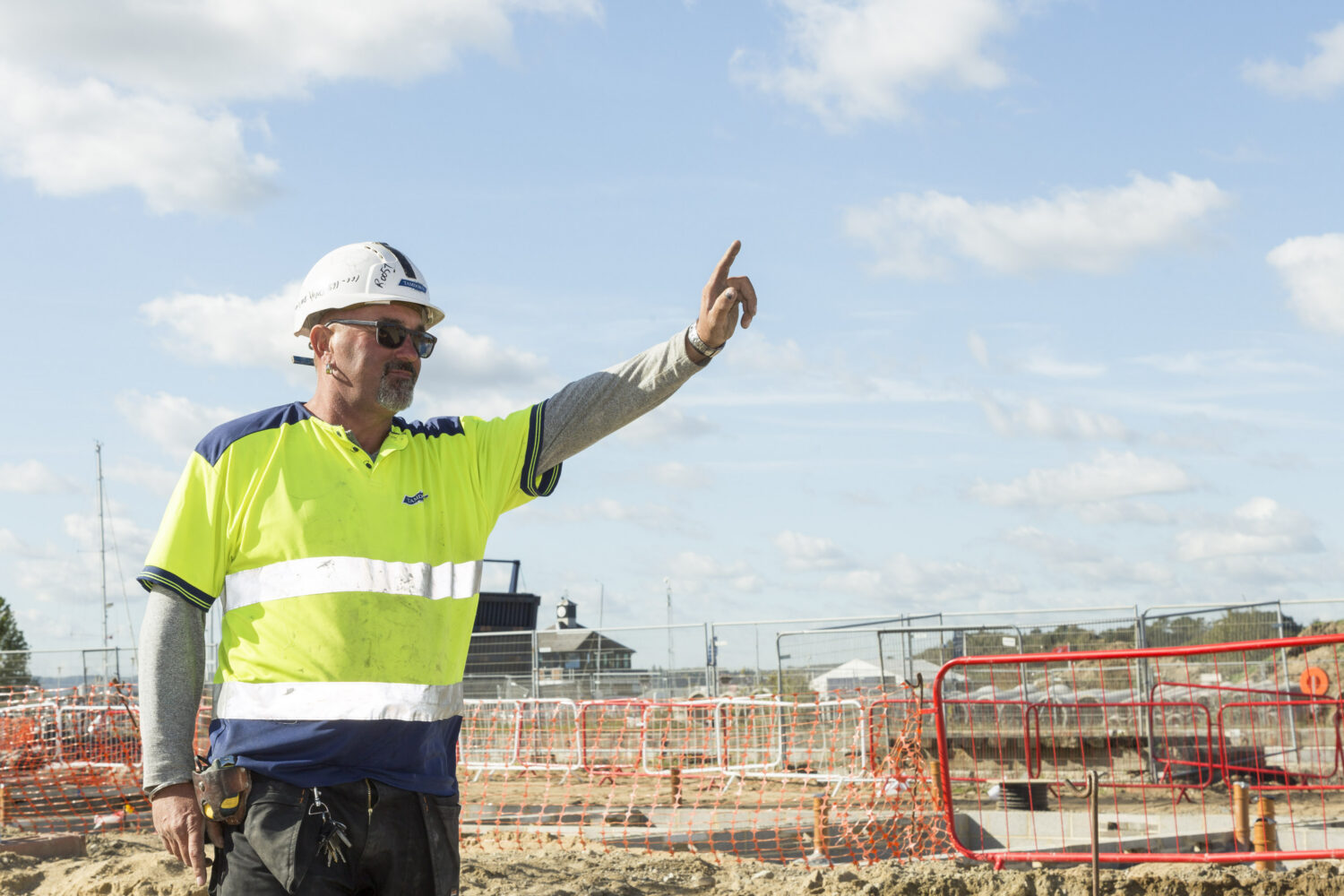
For our second feature, we spoke to Tommy Gant who has been working with Tamdown over for 34 years!
What is your earliest memory of Tamdown when you started?
Turning up with my bag of tools – you had everything you needed in that bag. We didn’t have the fancy electronic tools that you have today, just your hand-held tools.
What project stands out as especially meaningful?
St Mary’s Island – I lived quite close, so that was always a good thing that I didn’t have to travel so far to get to work. It was about 30 years ago now – there’s thousands of granite steps there – roundabouts, cobbles – and I worked on everyone of them!
How have the tools, techniques or site culture changed over the years?
Health and safety has definitely changed over the years. I’ve attended many courses since joining as health and safety has progressed. Toolbox Talks weren’t a thing when I started, you were just given your job. It was pretty simple in that respect. It was family-orientated back in the day – Tom Mohan would turn up and take us out for breakfast. I remember the times they organised a coach for us Kent workers to attend family fun days at Braintree Rugby Club in Essex.
What roles have you had at Tamdown?
I’ve been a health and safety representative, ganger man, black hat, dumper hat recently. I was also a mentor for the apprentices at St Mary’s Island.
Any stories that stick in your mind over the years?
I remember finding cannonballs whilst I was working at St. Mary’s Island – probably Napoleonic as the area was used as a burial ground for French prisoners of the Napoleonic Wars (1803-1815).
Today, I work with an engineer, Adam Ward, and his grandad really came to my rescue one day. We were standing near some 3-way traffic lights when a drunk driver came speeding by and somehow drove into the cables that got wrapped around his wheels. They ended up catching my legs and if it weren’t for Sean Ward’s quick thinking, which allowed him to get the cables away from my legs, I might have been dragged down the street. Luckily, I came away completely unscathed!
Do you have a moment when teamwork make all the difference?
You can’t do this sort of work on your own. It’s always been teamwork for me. We look after each other and just get on with it.
What advice would you give to someone just starting out?
When I started out the money for a groundworker was very good. I’d say get a mortgage and just work hard.
What keeps you motivated through the toughest days on the ground?
My two children, my two grandchildren and paying the mortgage! My daughter got married last year – that was a very proud day for me.
When there’s bad weather you just have to stay and do it. You just get on with it and try to be happy.
Thank you to Tommy for sharing his stories and reflections from years gone by. We hope you’ve enjoyed this look back at our shared history. Be sure to keep an eye out for next month’s feature, where we’ll spotlight another long‑serving colleague and continue celebrating 50 years of dedication, growth, and community.
Stories from our longest-serving colleagues: this month's spotlight - Mark Cain
As we mark Tamdown’s remarkable 50th anniversary, we’re taking a moment each month to look back at the people who’ve helped shape our story. Throughout the year, we’ll be sharing memories and reflections from some of our longest‑serving colleagues — those who’ve witnessed our evolution first-hand and contributed to the culture, resilience, and success we celebrate today. Their stories not only honour our past but also inspire the road ahead.
For our first feature, we spoke to Mark Cain who has been with Tamdown for 32 years!
What is your earliest memory of Tamdown when you started?
Other than turning up on that first day full of anticipation and a few nerves, the thing that really sticks in my mind is the feeling of camaraderie and team spirit that I encountered here.
What roles have you held within the Company?
I have carried out various activities in my career so far here, from Buying to Plant and from Waste Management to Transport (and a bit of technical thrown in), all of which have their challenges, excitement and steep learning curves.
How has the company changed?
Tamdown has changed hugely since I started – from a small groundworks contractor punching way above our weight, we’ve grown massively. We started a remediation firm and have been involved in some really challenging remediation projects including what is now the DP World project, we’ve carried out Concrete Frames and Shell & Core contracts. We’ve had a utilities arm and are now part of Nexus Infrastructure plc. We hold forums that are attended and listened to by our customers and the wider industry. It’s almost unrecognisable from its origins, but it’s still kept the team spirit and can-do approach.
What major changes or innovations have you witnessed?
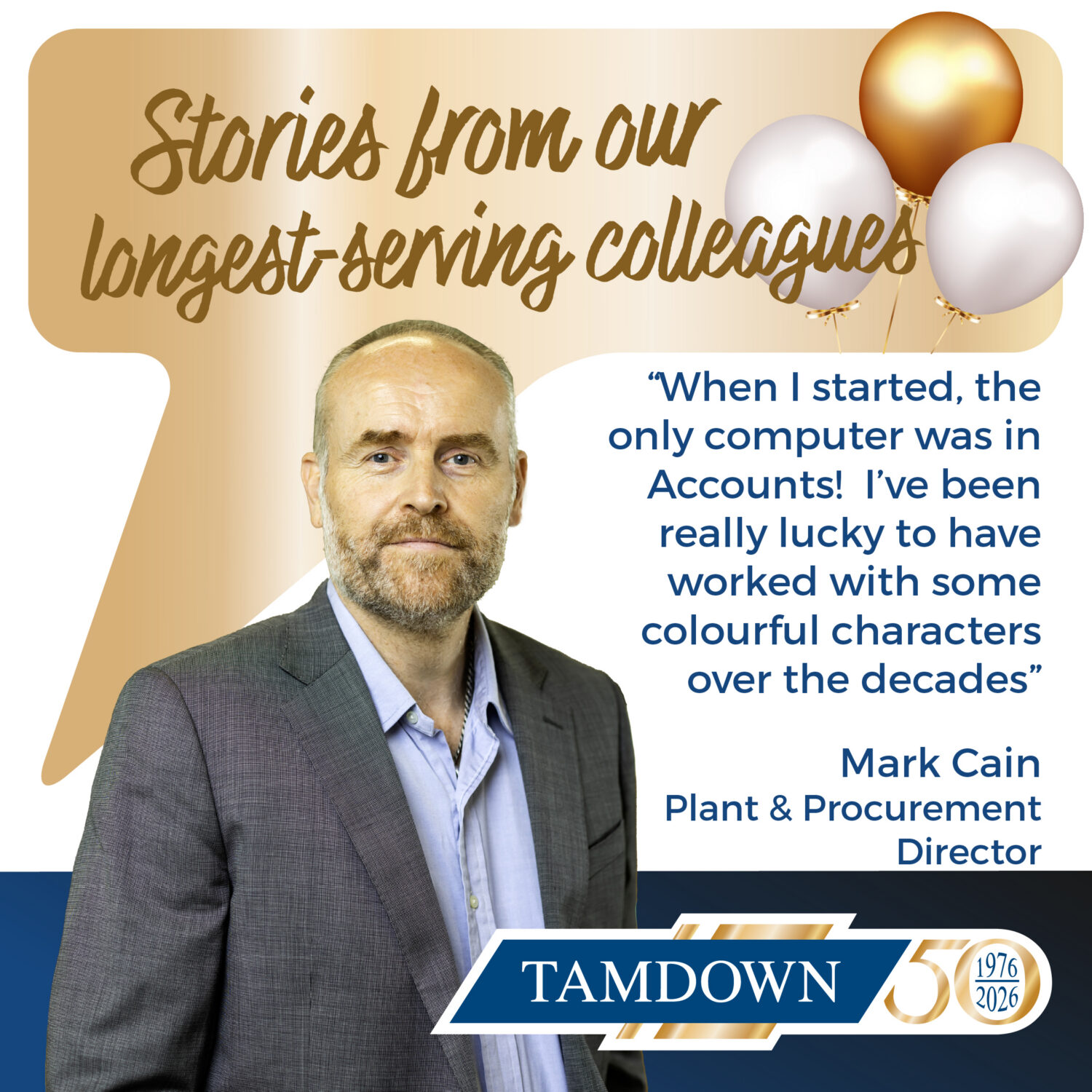
Without wanting to sound too old, when I arrived the only computer we had was in Accounts! We didn’t have digital cameras and the mobile phones were large, expensive and only worked for about half hour (nicknamed bricks). Everything was written by hand, filed and then manually checked, we used fax machines and post back then!
Any stories that stick in your mind over the years?
We used to work hard and play harder and doing that with some of the colourful characters that I’ve had the privilege to work with through the years has certainly produced some stories. Unexpectedly finding a box of hand grenades and having to call the bomb disposal team will always stick in my mind though.
What advice would you give to someone just starting out?
Firstly, learn a skill or trade that can not be replaced by AI. Secondly, try and do something you actually enjoy as you’ll spend a long time doing it. Thirdly, give it your all, learn all you can, it’s a waste of your time otherwise.
What keeps you motivated after so many years?
Some people resonate with the quote “it’s not the winning but the taking part that counts”, however I’ve never wanted to just ‘take part’ and if you like to win, that’s what keeps me motivated.
Thank you to Mark for sharing his stories and reflections from years gone by. We hope you’ve enjoyed this look back at our shared history. Be sure to keep an eye out for next month’s feature, where we’ll spotlight another long‑serving colleague and continue celebrating 50 years of dedication, growth, and community.
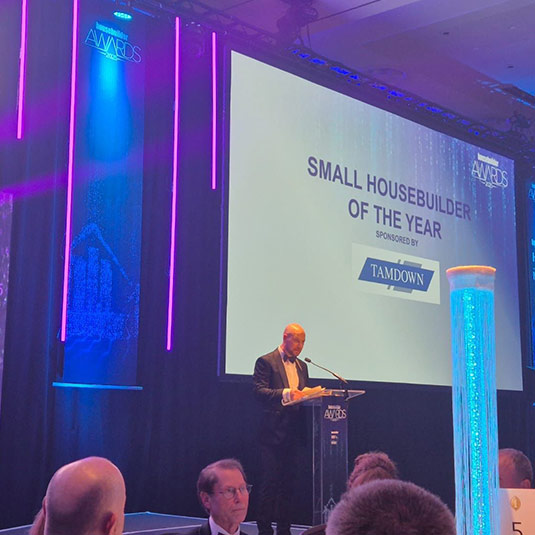
Congratulations to all the winners and highly commended at the 2025 Housebuilder Awards
Congratulations to all the winners and highly commended at the housebuilder awards last night.
We were proud to sponsor the awards show with our Managing Director, Rob Kendal presenting the small housebuilder of the year award.
A great event hosted by Housebuilder Media and good to see so many faces of the industry come together for the night.
An extra well done to the winners of the main prizes:-
🏆 Small Housebuilder of the year; Spitfire Homes
🏆 Medium Housebuilder of the year; Peabody
🏆 Large Housebuilder of the year; Bellway Homes

