
As part of our 50th anniversary celebrations, we’re shining a light on the people at the heart of Tamdown’s story. Each month, we’re hearing from some of our longest‑serving colleagues — those who have witnessed the journey first-hand, contributed to our success, and helped shape the hard-working culture we’re proud of today. Their stories not only reflect where we’ve come from, but also what continues to inspire us.
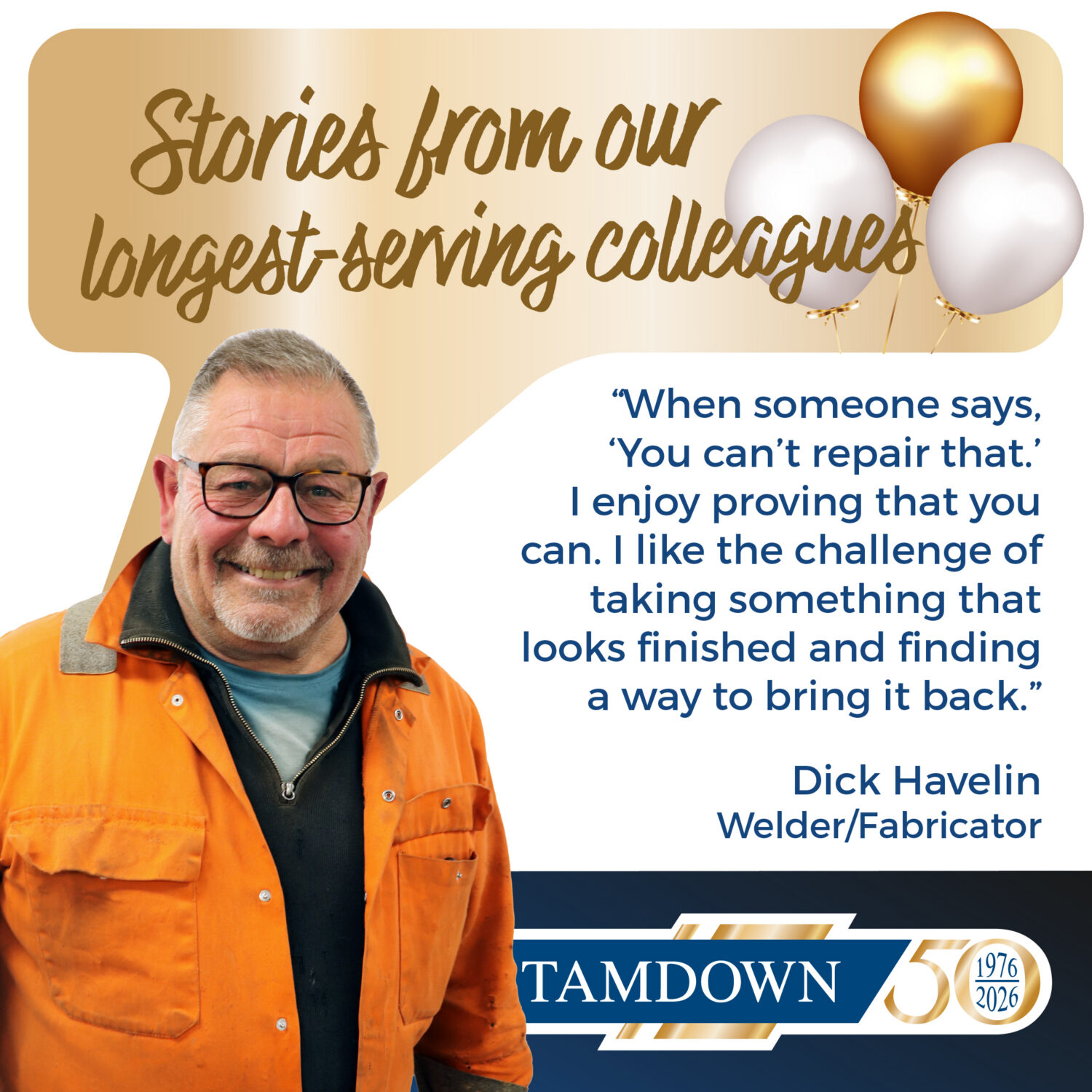
For our fifth feature, we spoke to Dick Havelin, Welder & Fabricator, who has worked at Tamdown Plant for over 26 years!
What made you choose welding as a career in the first place?
I’ve been a welder all my life and even had my own garage at one point. I’ve always enjoyed working with my hands and, to be honest, I’ve always mucked about with cars — it’s just something I’ve naturally gravitated towards. I actually came to work for Tamdown through Trevor, Lee Haylock’s dad, he was a good friend of mine — which is how it all started.
What is your earliest memory of Tamdown?
My earliest memories are working on the vans — servicing and repairs. There were around 110 vans at the time, so it kept me busy. I’d start at 6 in the morning and often finish around 7 in the evening, and I worked weekends as well. Trevor was a big part of those early days.
I also remember Mac and Tom, the original Tamdown owners, if they weren’t in the office or on site, they’d be in the Star pub in Braintree — you always knew they were there because they both had new Ford Granada’s, special editions, and they would be parked outside. It was very different to nowadays.
Did you imagine you’d still be here 26 years later?
If I’m honest, no — I always thought I’d retire earlier. But life has a way of changing plans, and circumstances meant I carried on working. Looking back now, I’m glad I did.
What skills are more important now than they were 20+ years ago?
My role has changed quite a bit over the years. I don’t work on the vans anymore. I focus on welding and fabrication now, mainly repairing buckets, replacing blades, and manufacturing new ones when needed. It’s more specialised now.
One of the challenges today is that there aren’t as many people coming through with strong welding skills. I’ve been fortunate to work with a great apprentice in the past, Callum, who was excellent. It’s important that knowledge and experience like that is passed on to the next generation.
How has the machinery you work with changed over the years?
It’s changed massively. We used to do everything on the vans ourselves, but now you don’t really touch them — you need a laptop to diagnose most faults. It’s a very different way of working compared to the hands-on approach we had years ago.
Has technology made the job easier, harder, or just different?
I’d say it’s just made it different more than anything. Sometimes it can be frustrating because you might know exactly what the problem is, but you still need a laptop to confirm it.
From a fabrication point of view, though, there have definitely been improvements. We used to do a lot of gas cutting, whereas now we use plasma cutters, which are much more efficient. That said, I still like to think I’m a bit old school — but if it works, it works.
Is there a repair or challenge you’ll never forget?
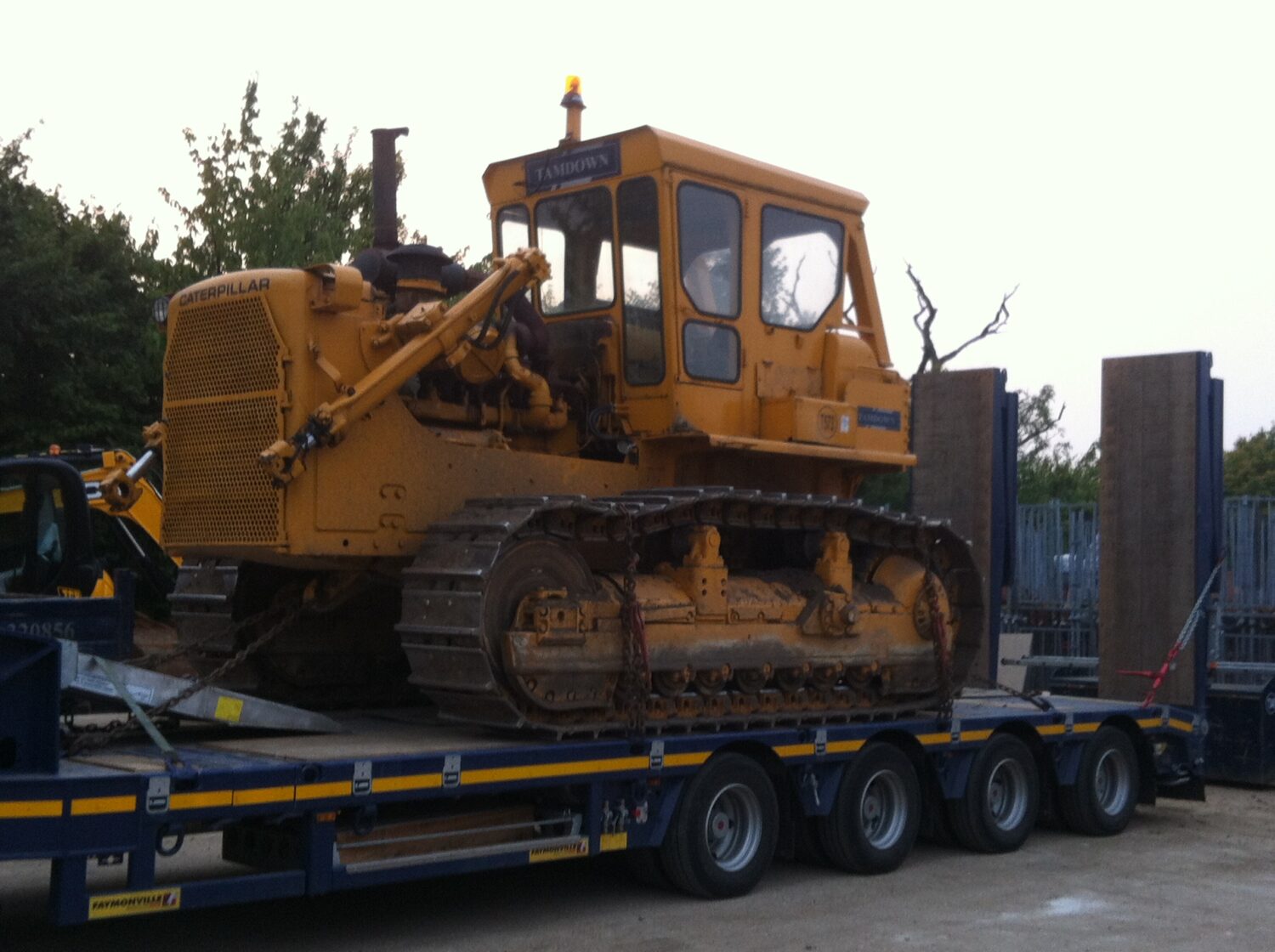
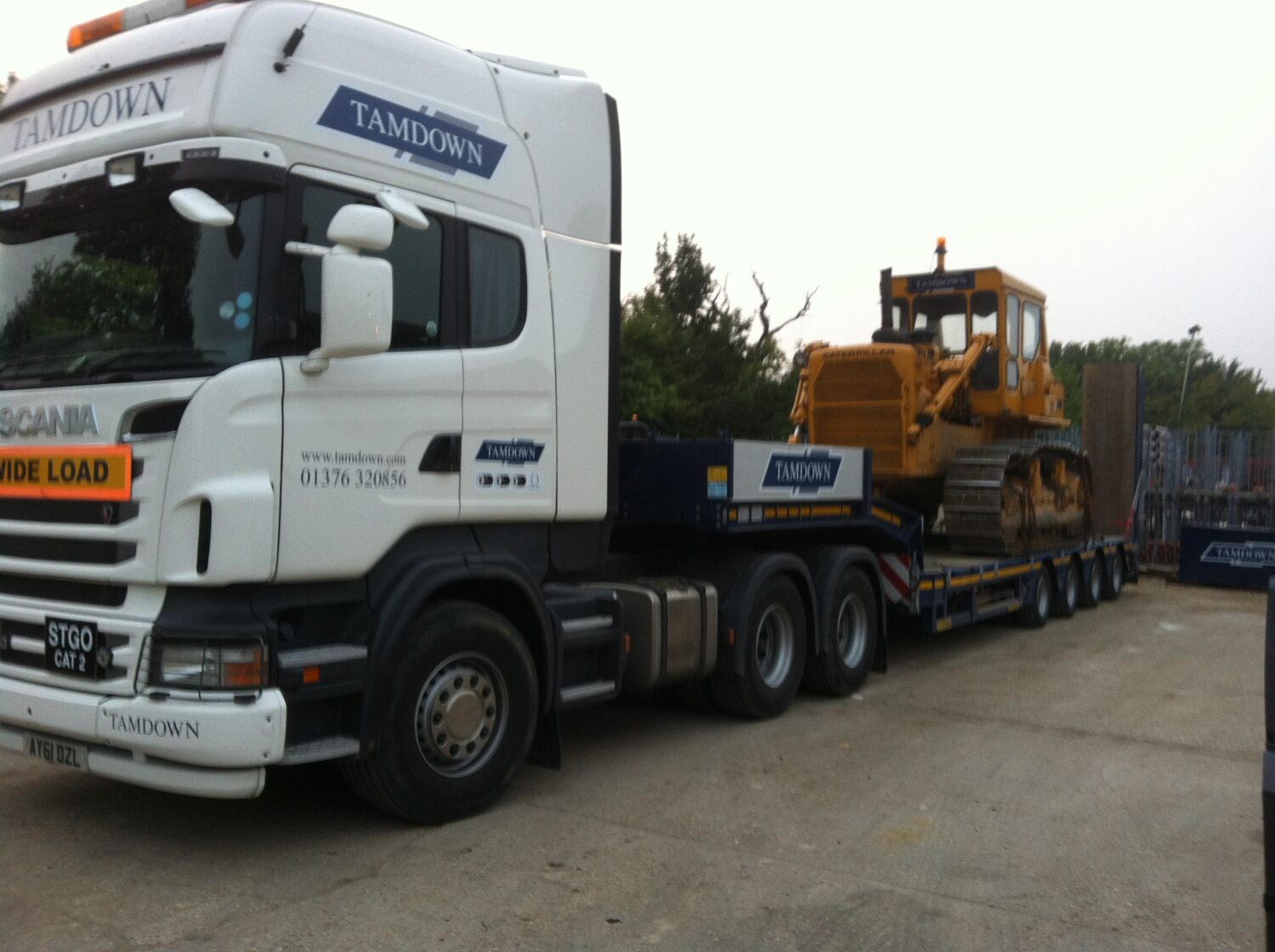
One job that really stands out was a repair on a D8 bulldozer and its box (the attachment used for moving and scraping earth). We had quite a few of those machines back in the day, nowadays the machines have GPS-controlled equipment.
This particular machine had been working at Beaulieu Park when the rams on the box collapsed, twisting the main section. A few engineers came out to look at it and said it was beyond repair and a complete write-off. But John Crick, the Tamdown MD at the time said, “We’ll get Dick to repair it,” and that’s exactly what I did.
We brought it back to the yard, laid everything out, and I rebuilt the whole front end. It took about a month in total. When it went back out, I’d managed to take the twist out and get it fully operational again. It was a challenging job, but one I’m still proud of — especially as it was over 20 years ago now.
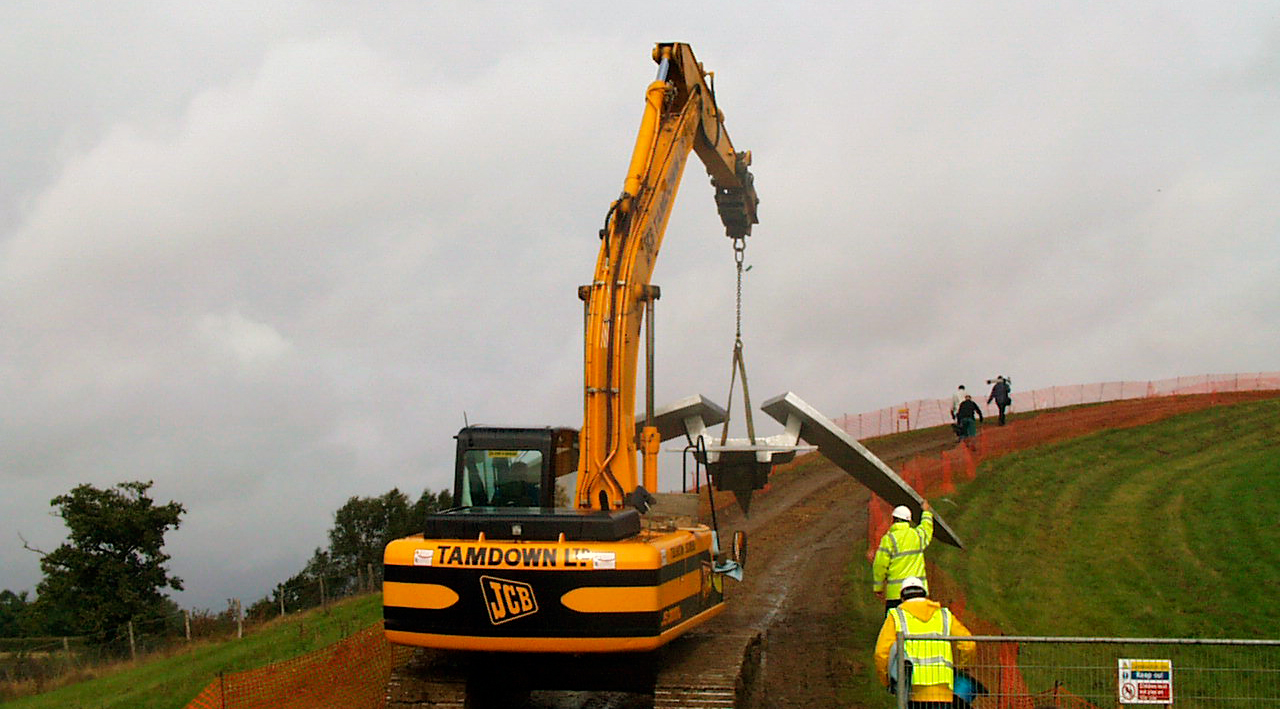
If you’re local to Braintree, you’d be interested to know that Tamdown helped form the earthworks for the Great Notley country park, which people will now see as the hill and surrounding landscape. They also cast the concrete plinth on the top of the mound and transported and placed the bird sculpture (twice, the first effort was stolen and dragged a couple of miles across the fields!).
What piece of kit have you always enjoyed working on?
To be honest, I’ve always just enjoyed the job itself. It used to be very varied, which meant no two days were the same, and that’s what I liked about it. Working on different pieces of kit and facing new challenges kept things interesting.
What achievement are you most proud of in your time here?
Repairing the box on the D8 is definitely one I’m most proud of. It was a real challenge, and to bring something back that others thought was beyond repair was a great feeling.
I also take pride in the smaller things — doing a neat, tidy job and knowing it’s been done properly. And mentoring apprentices has been a big part of it too. Passing on my skills, particularly in welding, and seeing someone progress and develop — it’s rewarding.
Is there a job where you stood back at the end and thought, “That’s a proper result”?
A lot of the time it’s when someone says, “You can’t repair that.” I enjoy proving that you can. I like the challenge of taking something that looks finished and finding a way to bring it back. That’s when you really stand back and think, that’s a proper result.
What keeps you motivated after so many years?
I genuinely enjoy my job, which makes a big difference. It’ll be a big change when I do retire — I think I’ll miss it more than I expect.
How important is teamwork?
These days I tend to work on my own quite a bit, but it’s always been about the people. In the early days, it felt very family-oriented. You had characters like ‘Ginger Tom’ who would always come through and check how you were getting on. Mick and Keith were very old-school as well — it was a different atmosphere.
I remember Mandy bringing round the wages and paperwork — everyone would come back to the office to collect their pay, usually on a Tuesday, and we would often end up in the pub. It made things more social and brought everyone together.
How has the culture in the workshop changed over the years?
In some ways, it hasn’t changed much at all. The values are still the same —hard work and getting the job done properly.
What advice would you give to an apprentice starting today?
If you’re going to learn a trade, learn it properly. In welding, there are several disciplines — MIG, MAG, manual arc (stick welding), TIG (Tungsten Inert Gas) —and some of the older methods, like gas welding, are becoming a dying art.
My advice would be to start with the basics of engineering first—milling, drilling, grinding — then move on to welding. After that, learn how to read drawings properly. Build your knowledge step by step.
What’s something you’ve learned that you wish you’d known earlier?
I did an apprenticeship myself, which set me up well. Once you’ve built something as complex as, say, a car transporter, there’s not much that intimidates you after that. It gives you confidence in your ability.
There’s a real sense of pride in building something from scratch — I used to even put my name on the back of projects I’d worked on.
Looking back, what stands out most from your time at Tamdown?
There are a lot of good memories. From the early days working on the vans, to busy workshops, to challenging repairs — it’s been a varied career.
For me, it’s the combination of the work, the people, and the jobs you’ve been part of that really stands out. And knowing you’ve played your part over the years — it means something.
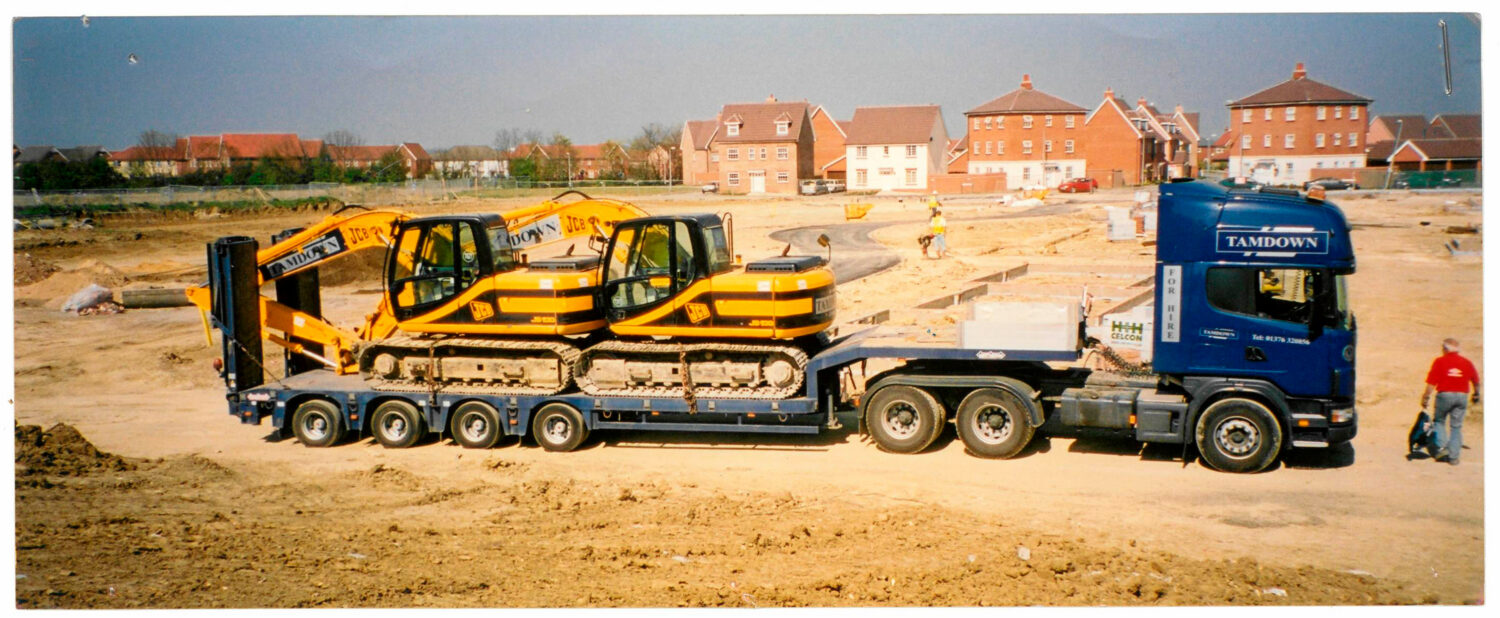
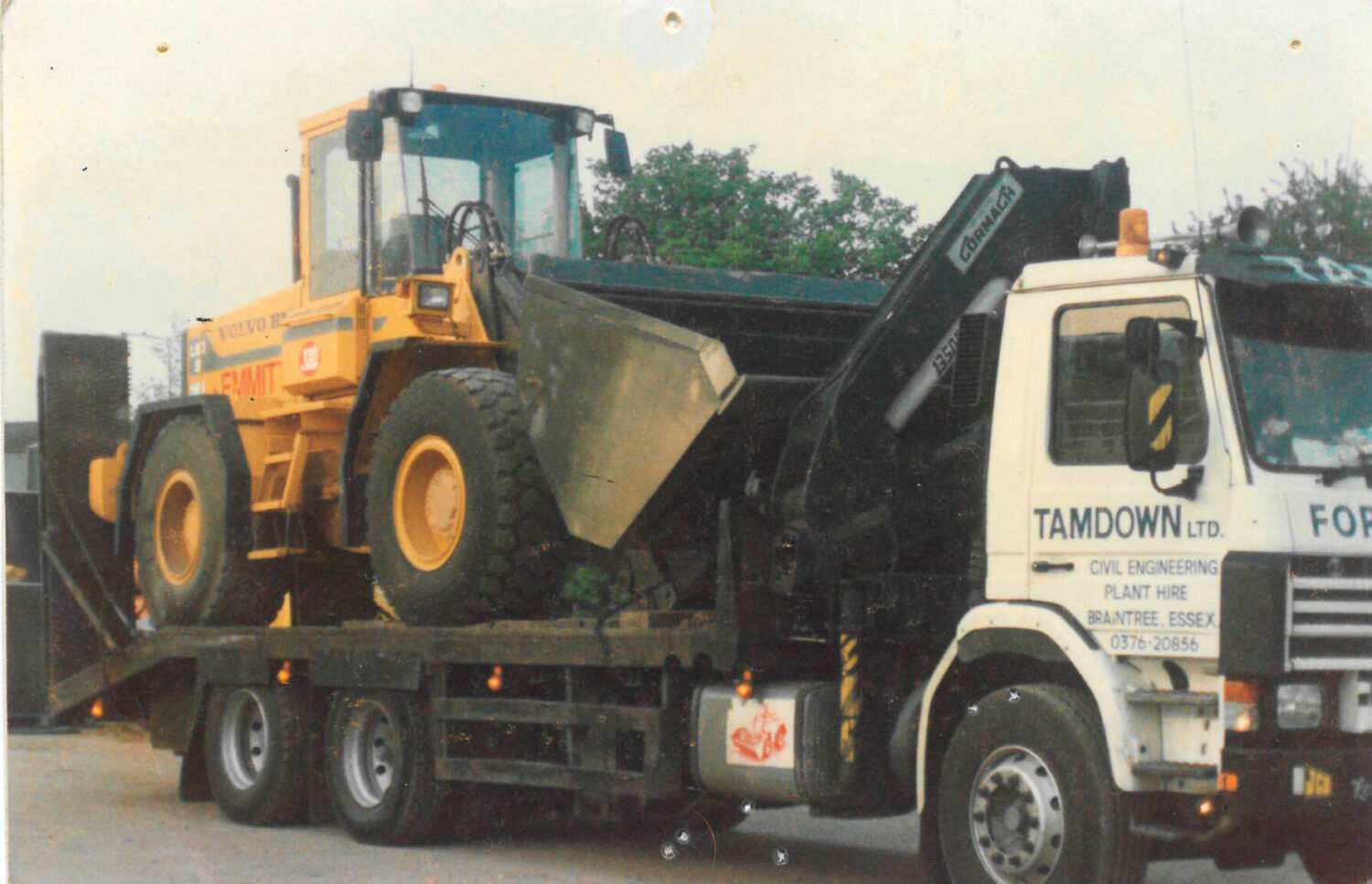
Just some of the machinery Dick has worked on during his time with Tamdown…
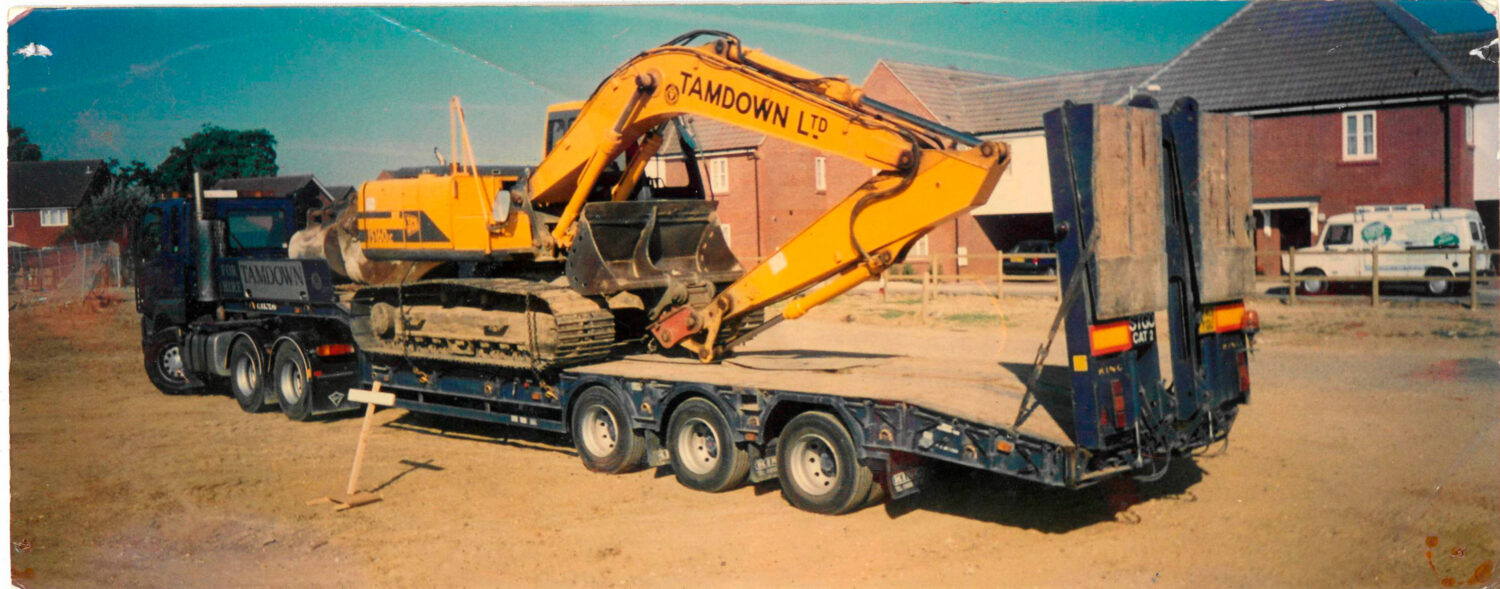
Bird of Freedom being installed in Great Notley Country Park in 2000
Thank you to Dick for sharing his stories and reflections from years gone by. We hope you’ve enjoyed this look back at our shared history. Be sure to keep an eye out for next month’s feature, where we’ll spotlight another long‑serving colleague and continue celebrating 50 years of dedication, growth, and community.